 takeda
1. What is relocation?
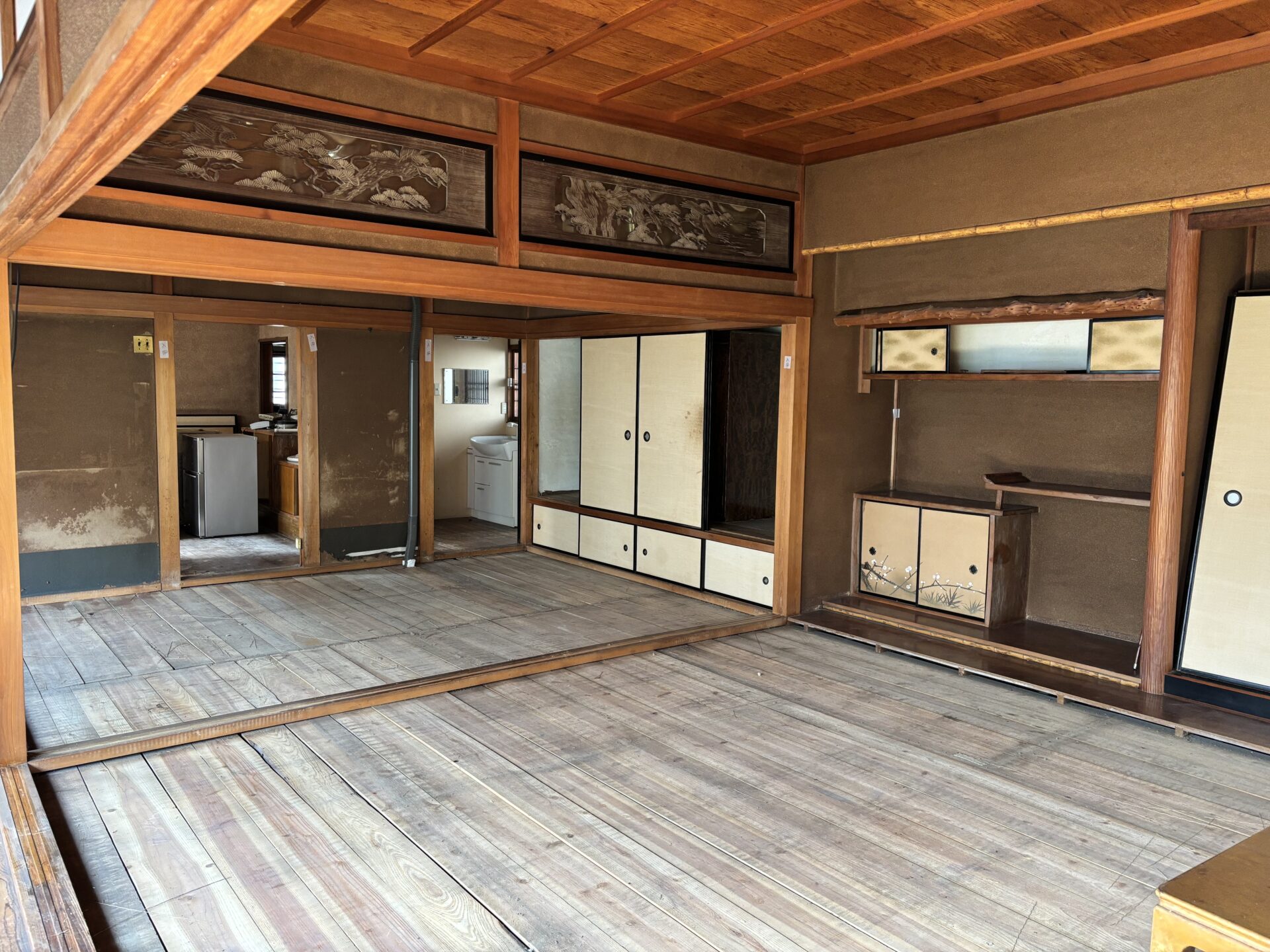
When inheriting a family home or a relative’s property, many people face the question of what to do with the building. Considering the difficulty of maintenance and the distance from their current place of residence, it is often impractical to simply leave it standing. Generally, the choices are to sell it or demolish it and clear the land. However, if the building contains high-quality timber or features architecturally significant elements, simply discarding it is regrettable from an architectural perspective.
This is where “relocation” emerges as a viable alternative.
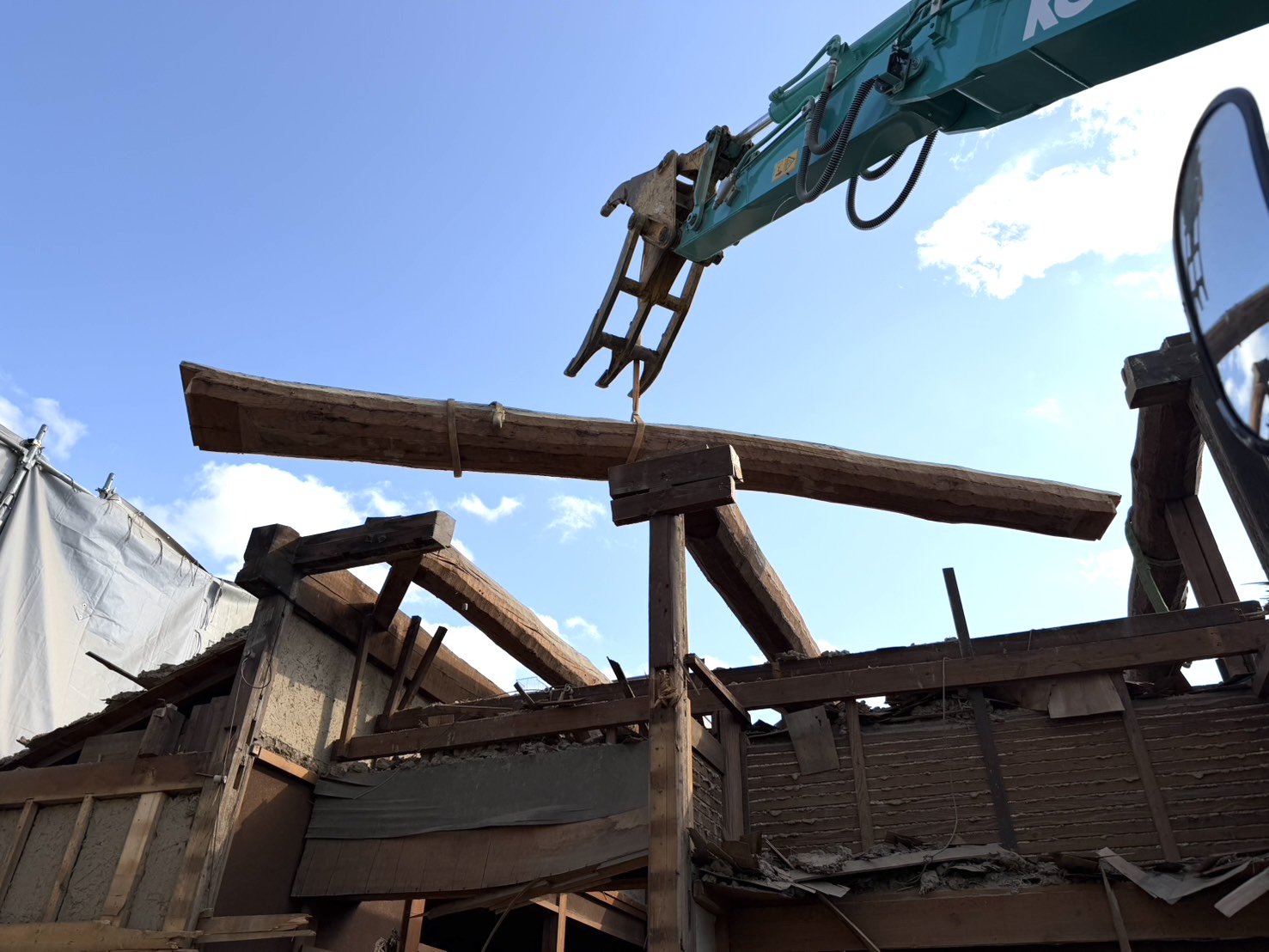
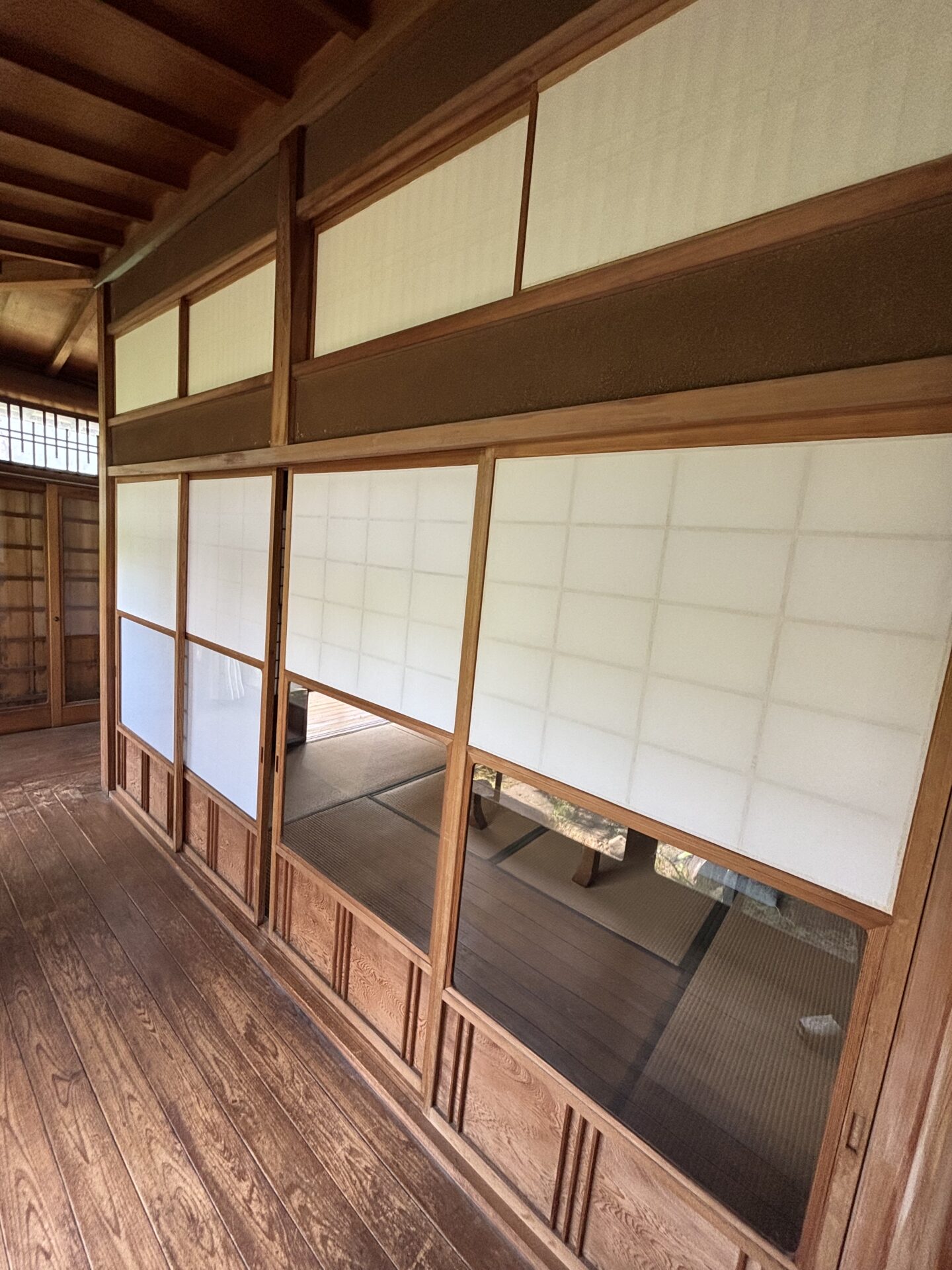
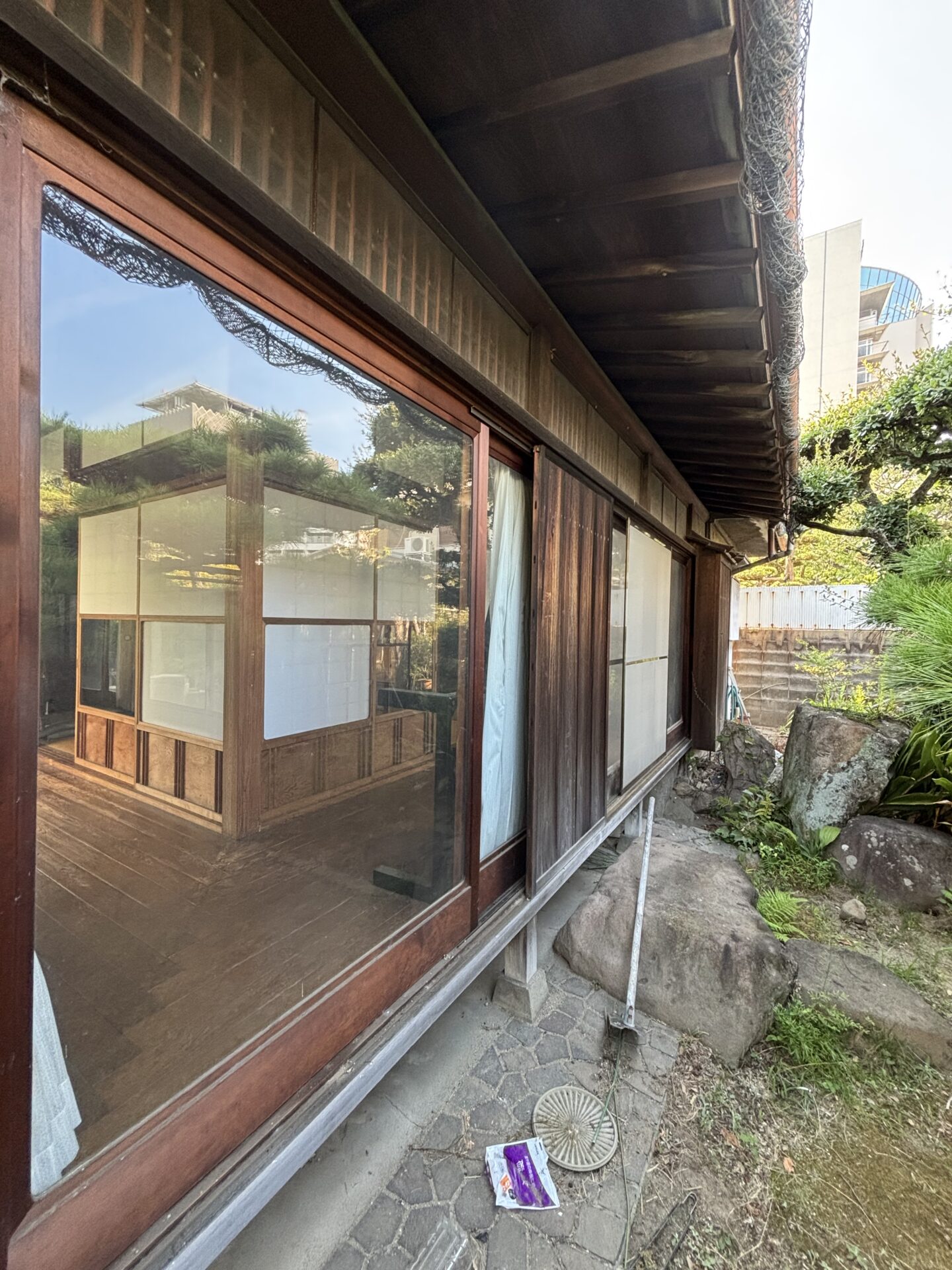
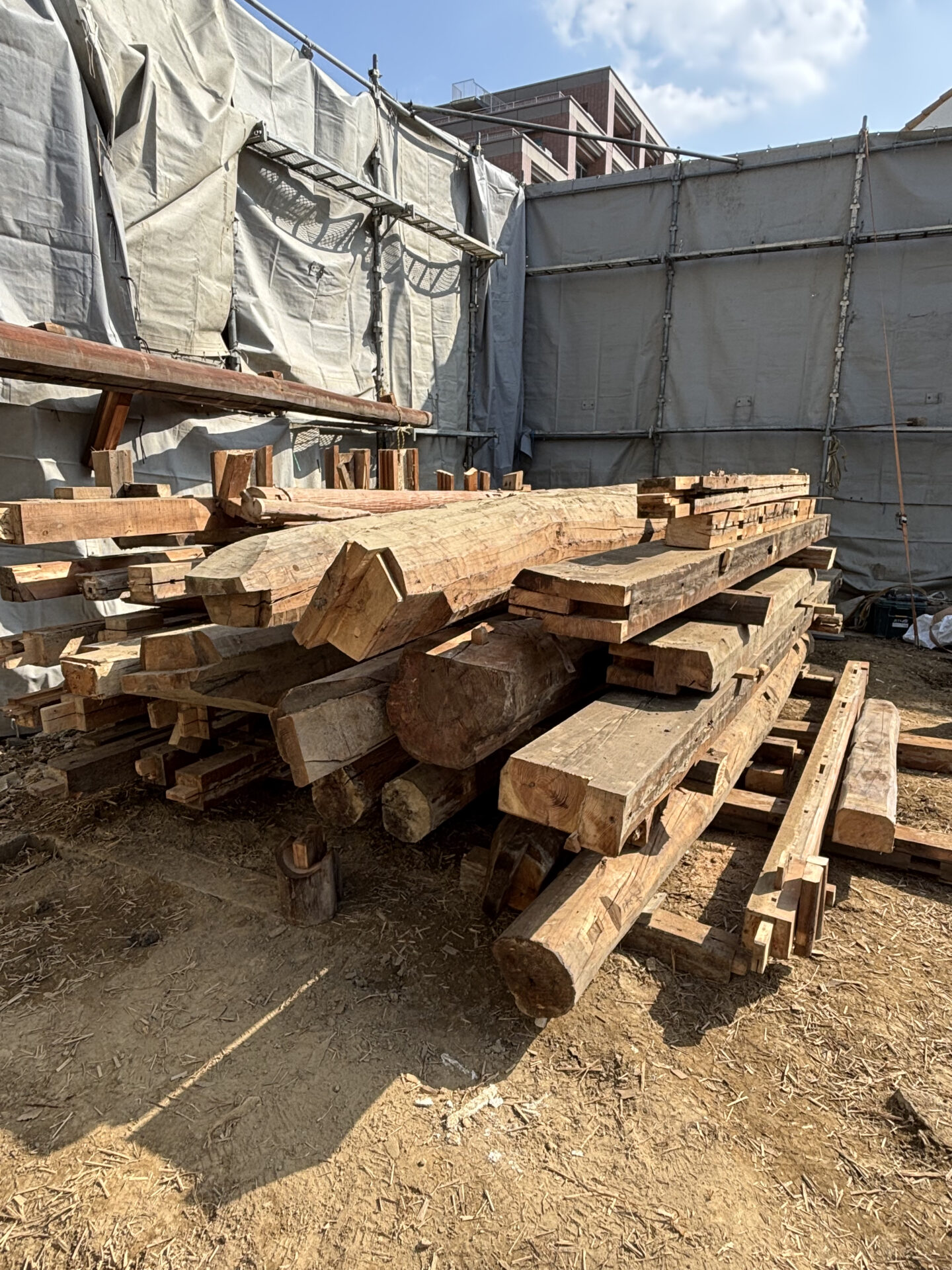
Currently, raumus is undertaking a project in which structural timber from an old house in Wakayama Prefecture is partially dismantled and incorporated into a new building in Itoshima City, Fukuoka Prefecture. Using this project as a case study, we will explain the fundamental knowledge surrounding the relocation of old houses, the specific techniques involved, and the unavoidable realities of cost and practicality that must be considered.
2. Three Approaches to Relocation
Even when referring to relocation, there are several distinct methods. Here, we shall explain three such approaches.
① House Moving (Hikiyā)
This technique involves lifting the building from its foundations using jacks without dismantling it, then moving it as a single unit.
Characteristics: The building’s shape and finish can be preserved intact.
Application: Limited to very short distances, such as moving within the same site or to an adjacent plot. Constraints from road width and obstacles make long-distance relocation physically impossible.
② Complete Relocation
This technique involves dismantling the building down to its individual components and reassembling it exactly as it was at the new location. It is employed for preserving cultural assets.
Features: The original design and spatial layout from the time of construction can be recreated.
Challenges: Extensive reinforcement and renovation to comply with current building codes and energy efficiency standards are typically required, often resulting in costs exceeding those of new construction.
③ Partial Relocation / Reuse of Old Timber (This Case)
This method involves selecting well-preserved components or parts of architectural value—such as beams, pillars, fittings, or transoms—from an existing building and reusing them as part of a new structure.
Characteristics: This allows the unique texture of old timber to be incorporated into a new home meeting modern lifestyle requirements and performance standards (insulation, seismic resistance).
- Advantages: As the entire structure is not preserved, design freedom exists to suit site conditions and new uses.
The project currently undertaken by raumus falls under the aforementioned ‘③ Partial Relocation’. A traditional Japanese house in Wakayama is being dismantled, with carefully selected structural timber transported to Itoshima, Fukuoka. These are being incorporated into a newly built holiday home situated in a naturally rich area surrounded by sea and mountains.
Why go to the trouble of transporting it?
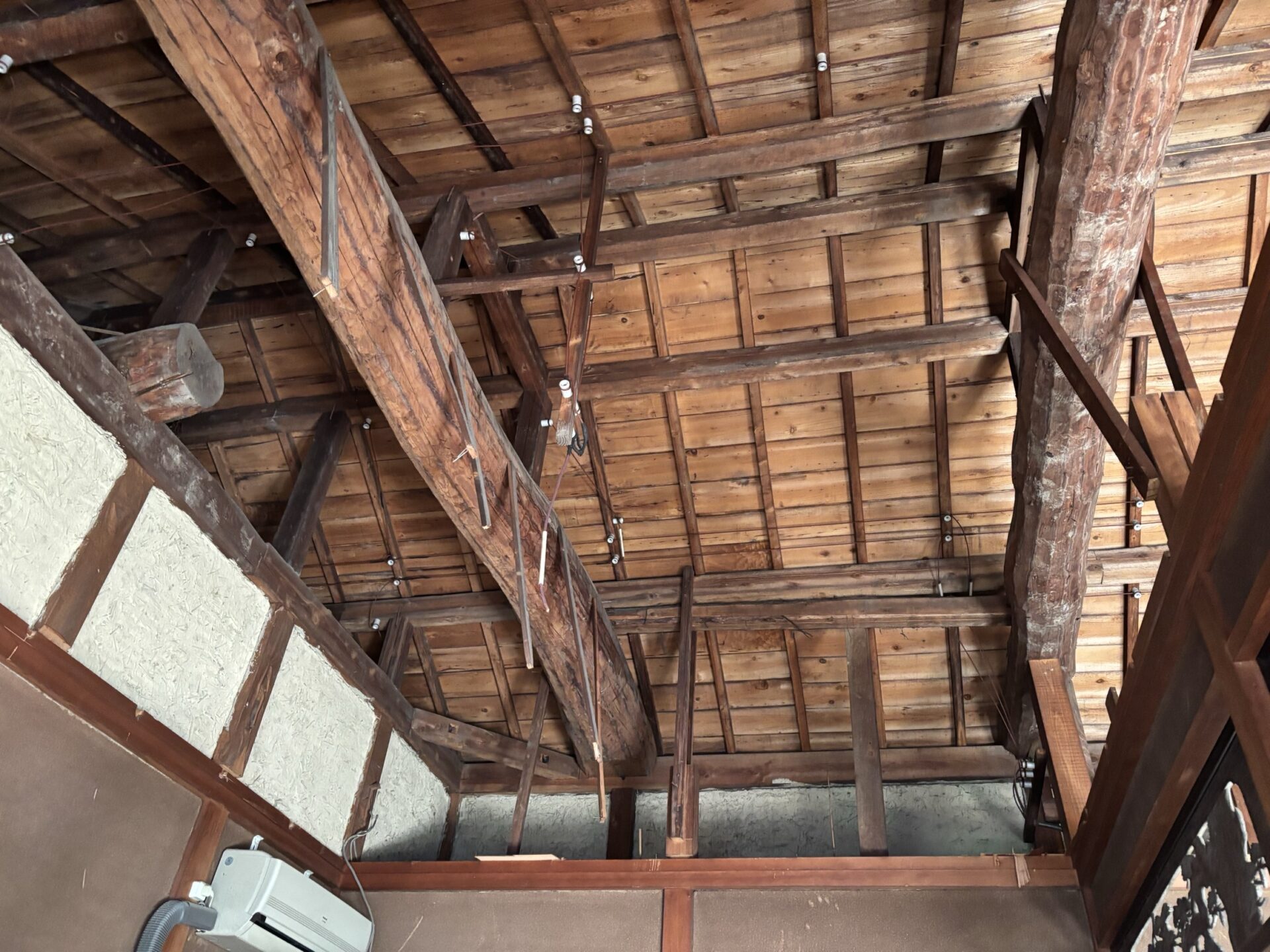
The core of this project is not mere nostalgia. Ancient timber (such as native pine and zelkova), dried over decades or centuries and having gained strength, possesses an overwhelming presence and quality unmatched by new timber circulating in the modern market.
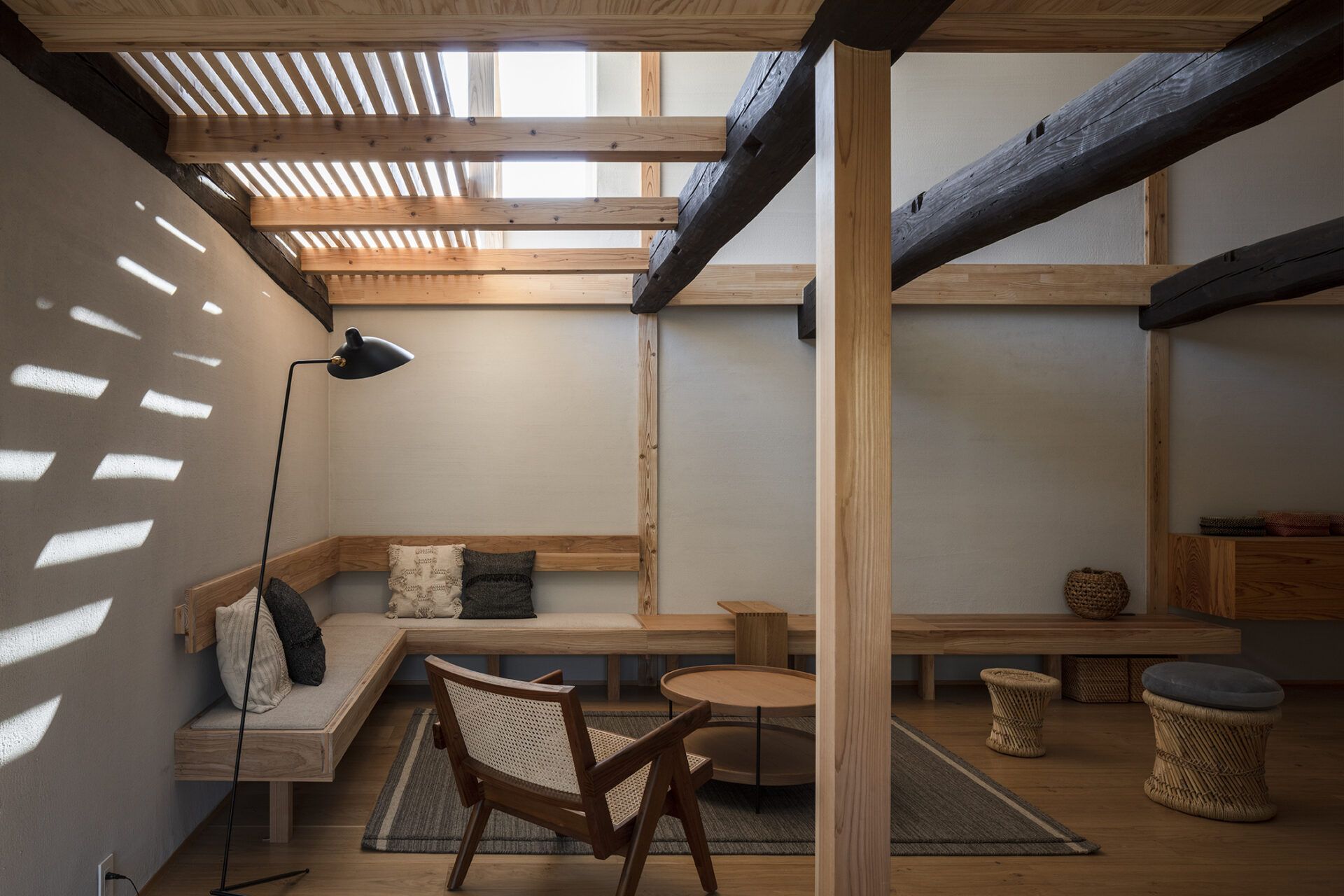
However, it is also true that maintaining such old houses as dwellings presents significant hurdles in meeting modern thermal comfort and seismic standards. Therefore, we are constructing a high-performance “vessel” using contemporary technology, incorporating this timber – whose texture can only be acquired through the passage of time – as its internal framework.
The Building Standards Act and ‘Relocation’: How to Clear the Legal Hurdles
When considering the relocation of an old house, compliance with the Building Standards Act is unavoidable. Under modern legislation, extremely strict restrictions are imposed on moving an old building as a complete ‘structure’.
- Relocation is Legally Treated as “New Construction”
Surprisingly little known, when a building is moved and erected elsewhere, it is fundamentally treated as “new construction” under the Building Standards Act. This means that even structures built in the early Shōwa or Meiji periods require full compliance with all “modern standards (seismic resistance, fireproofing, energy efficiency, etc.)” at the new site to obtain building permission (confirmation application).
- The barrier of structural calculations: How to evaluate old timber
Modern timber-framed houses prove their safety by quantifying factors such as the thickness of posts and beams, the metal fittings at joints, and the quantity of load-bearing walls. However, the traditional construction methods of old houses (such as stone-based foundations and footing reinforcement) are ‘flexible structures’ and do not directly fit into the calculation formulas based on modern ‘rigid structures’.
Member Strength Assessment: As old timber lacks clear strength values like JAS standards, structural designers must assess the wood species and drying state, then perform calculations incorporating safety factors.
Joint Reinforcement: Traditional joints and mortise-and-tenon connections often fail to meet current standards, necessitating reinforcement in unseen areas using bolts, tie plates, or modern load-bearing walls.
- Why “Partial Utilisation” is the Practical Solution
In cases of ‘complete relocation’ where the entire building form is reproduced, the structural calculations and thermal insulation compliance mentioned above incur enormous costs and construction periods. Conversely, the ‘partial relocation (reuse of old timber)’ approach we adopted in the Itoshima project allows, legally, for the old timber to be incorporated as “cladding” or ‘decorative structural elements’ within the framework of a ‘new build’.
A hybrid with modern framing: This technique involves constructing a robust frame (structure) meeting contemporary standards and integrating the reclaimed timber within it. This enables the reproduction of the spatial composition and texture unique to old houses while ensuring legal safety compliance.
- Restrictions in Fire Prevention Zones
Depending on the relocation site’s zoning (Fire Prevention Zone or Quasi-Fire Prevention Zone), exposing timber may be restricted. To avoid situations where beautiful beams and pillars must be concealed behind plasterboard, verifying legal regulations is essential from the land selection stage.
- The Structure of Relocation Costs
Understanding costs is paramount when considering relocation. The perception that ‘using old timber saves on material costs and makes it cheaper’ is often mistaken. Generally, construction utilising old timber tends to be more expensive than standard new-build projects. This is primarily due to the increased “labour” and ‘skills’ required.
Factors Affecting Cost Variation
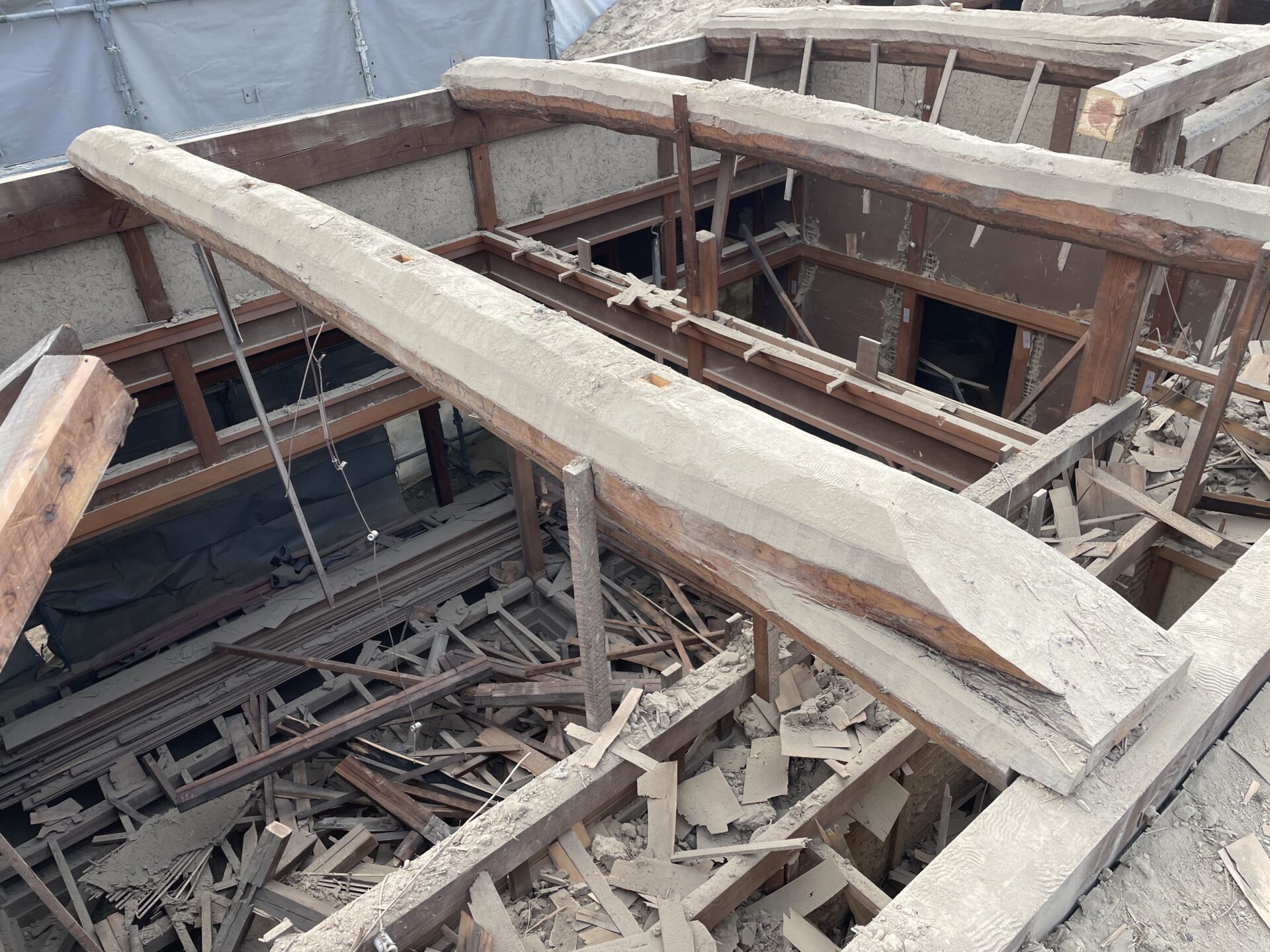
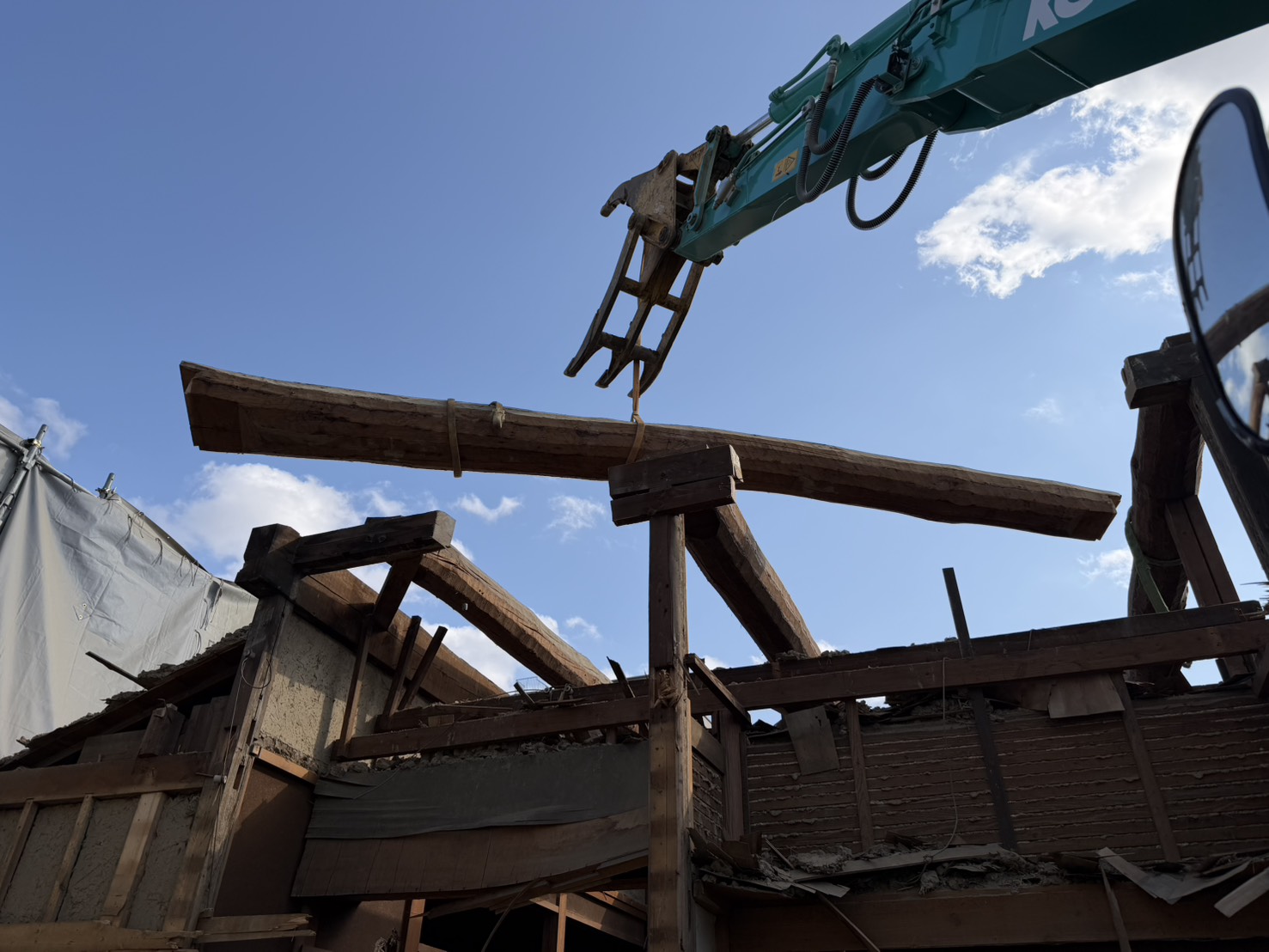
Dismantling Method (Manual Dismantling)
While standard demolition uses heavy machinery for demolition, relocation aims to ‘rescue structural members’. Carpenters must carefully dismantle the structure by hand, interpreting its construction. This requires several times the labour hours and costs compared to standard demolition.
Transport and Storage
Transport costs arise for moving long beams and pillars to remote locations. Storage costs are also incurred to manage the timber appropriately during the period before processing.
Processing and Cleaning of Reclaimed Timber
Reclaimed timber may have warped over time or developed mortise holes. Joining this with modern pre-cut (factory-processed) timber requires “hand-cutting” by highly skilled carpenters. Maintenance costs also include “washing” to remove years of grime and surface finishing.
The Rationale for the Cost
Advantages and Disadvantages
We outline the advantages and disadvantages of relocating old houses (including partial relocation).
Advantages
Design Appeal: The unique colour and texture of reclaimed timber lend depth to spaces. It complements modern materials (glass, iron, concrete) well, enabling highly distinctive designs.
Reduced Environmental Impact: It prevents usable resources from being discarded, contributing to resource circulation.
Preservation of Memory: Even when the physical “house” no longer exists, its elements remain within the new living environment.
Disadvantages
Cost and Duration: As mentioned, the labour-intensive nature tends to increase costs and extend the construction period.
- Uncertainties: The precise condition of components (such as corrosion or termite damage) may only become apparent upon dismantling, requiring flexibility for plan adjustments.
- The Relocation Assessment Process and raumus’s Role
If you are considering demolishing a building you own and simultaneously perceive potential for reusing its materials, consulting an architect before commissioning demolition work is essential.
Once heavy machinery enters the site, those materials become “industrial waste” and cannot be recovered. Determining which components are structurally reusable and which parts hold design value requires specialist expertise.
Particularly regarding legal compliance, preliminary discussions with local authorities and designated confirmation inspection bodies are necessary during the early design stages. How can the desire to “reuse old pillars” be realised under current regulations, and what constraints might exist? Anticipating these factors and reconciling design with safety is the architect’s role.
For this Wakayama to Itoshima project, we are not merely transporting materials. We are considering the optimal placement for Wakayama’s components, taking into account local regulations, ground conditions, and the climate and environment.
The raumus Process
Site Survey & Assessment: We inspect the existing building, evaluating material quality, feasibility of removal, and reuse potential from an architectural perspective.
Planning: We propose the most suitable utilisation method – whether “complete relocation” or “partial reuse” – aligned with the budget and requirements of the new building.
Selection and Supervision: We direct the sorting of necessary components during demolition and oversee the process until they reach the new site.
As demonstrated by this Wakayama to Itoshima project, we can manage projects even when locations are distant. Rather than a binary debate of “preserving everything” or “demolishing everything”, there exists an alternative approach: “extracting the good parts and re-editing them into new value”.
In conclusion
Architecture is not solely about demolition and reconstruction. Nor is it necessarily optimal to preserve old structures at all costs.
We identify the potential within older buildings and, through contemporary technology and design, transform them into spaces where future generations can live comfortably. At raumus, we create architecture with this context in mind.
If you own an old house and wish to explore its potential use, including cost-effectiveness, we invite you to consult with us without obligation.
-
 NOTE
NOTE
Types and Costs of Relocation, and Its Potential as a Building Material | Using …
Architecture1. What is relocation? When inheriting a family ho […]-
 takeda
-
-
 NOTE
NOTE
Akiya Renovation | Attractiveness and Methods of Renovation of traditional Japan…
ArchitectureThe Importance of Renovation of traditional Japane […]-
takeda
-
-
 NOTE
NOTE
Integrated Living: How Blending Work and Home Revitalizes Your Lifestyle
LifeI would like to write about how living in close pr […]-
takeda
-
-
 NOTE
NOTE
The Difference between an Architect and Kenchiku-Shi | Who is an Architect?
ArchitectureWhat is an architect? I am often asked. It is a na […]-
takeda
-
-
 NOTE
NOTE
What Makes a City Attractive? | What Shapes the Atmosphere of Japanese Cities
City1. Whether I want to live there depends on the tow […]-
takeda
-