 takeda
 Adaptive reuse — known in Japan as yōto henkō (用途変更), or “change of use” — is the practice of converting an existing building to a new legal purpose without demolishing it. In Japan’s mature urban markets, this approach is increasingly used to turn aging buildings into hotels, simple lodging facilities, offices, cafés, and cultural venues, typically at 20–30% lower cost than new construction.
This article explains how building conversion works in Japan: typical renovation costs, the three legal frameworks involved in hotel conversions, how to handle “existing nonconforming” and illegal buildings, and what the process looks like end to end. It draws on the experience of raumus, a Fukuoka-based architectural office specializing in adaptive reuse and change-of-use projects across Kyushu.
TL;DR
- Adaptive reuse in Japan can save 20–30% versus new construction.
- Hotel and lodging conversions require resolving three legal frameworks at once: the Building Standards Act, the Hotel Business Act (or Private Lodging Business Act), and the Fire Service Act.
- Buildings without a Certificate of Inspection can still be financed and converted, via the official MLIT Guideline Survey.
- Conversion confirmation under the Building Standards Act is only required above 200 m², but other safety and zoning rules always apply.
1. What Is Building Conversion (Change of Use) in Japan?
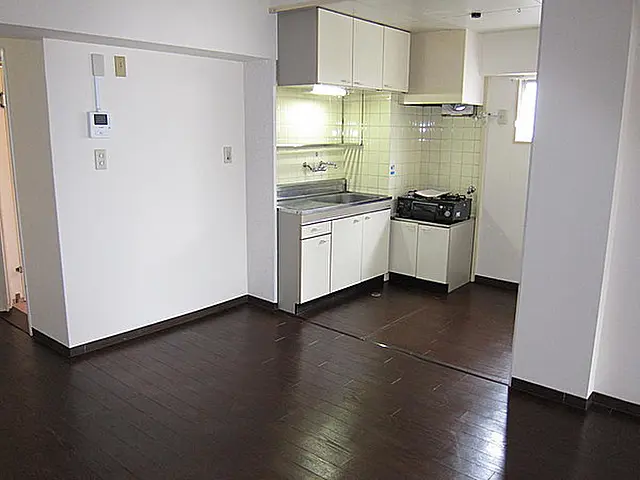
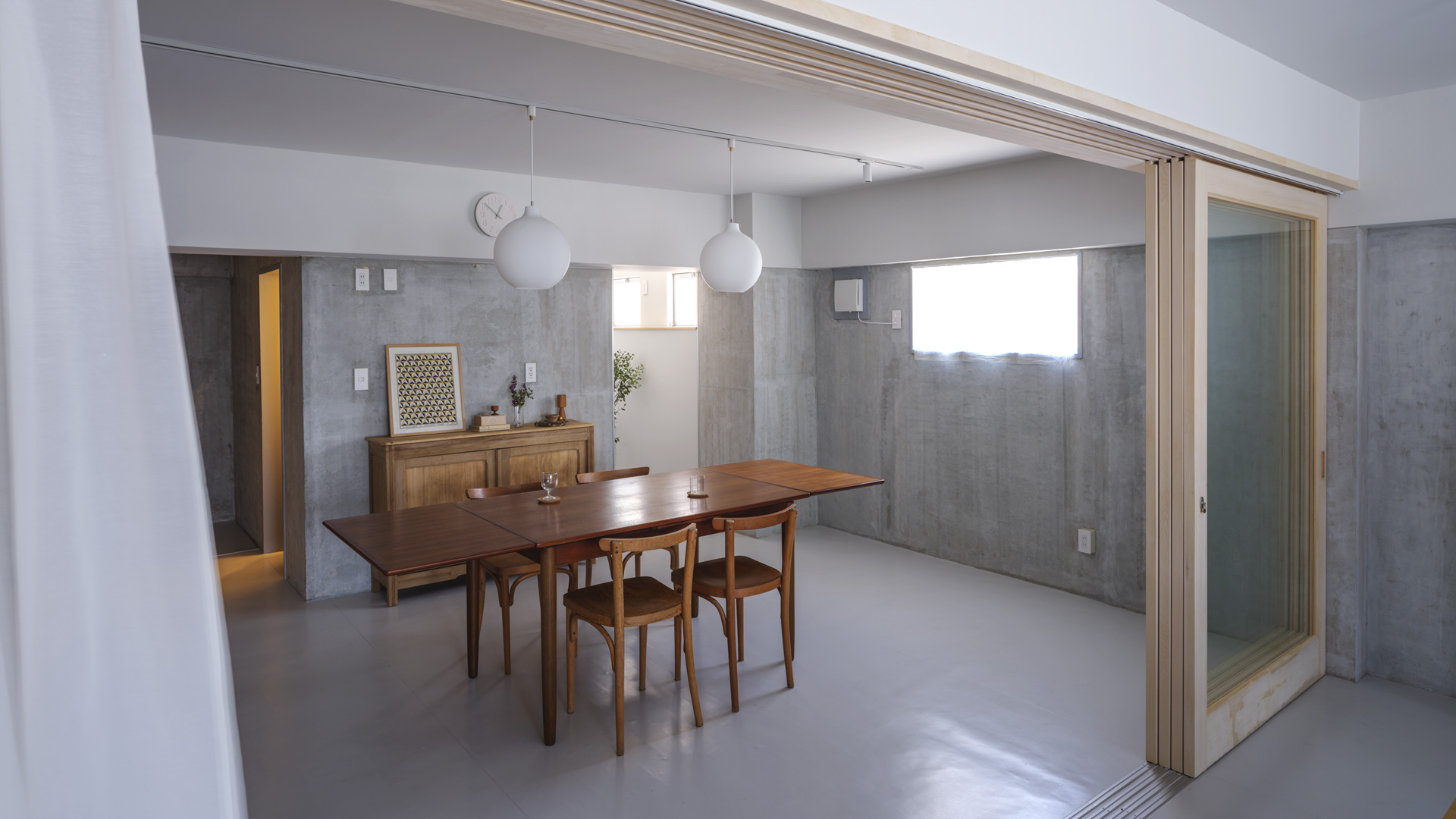
A “change of use” (yōto henkō) is the legal procedure of reassigning an existing building to a different purpose under Japan’s Building Standards Act. A common urban example is converting part of a rental apartment building into retail tenancy. More recently, converting aging buildings into hotels and simple lodging facilities (kan’i shukusho) has been the fastest-growing pattern. Other examples include warehouses turned into cafés or art galleries, and factories turned into shared offices or cultural venues.
In Japanese cities, more old buildings are being treated as community assets and given a second life. Renovation is not just about extending a building’s lifespan — it also contributes to regional revitalization and reduced environmental impact.
That said, anyone working on an old building in Japan eventually runs into two distinct legal categories: “existing nonconforming buildings” (kizon futekikaku) and “illegal buildings” (ihō kenchiku). The older a building is, the more likely it carries one of these issues, and they can become major hurdles in any change-of-use project. With proper architectural expertise and the right procedures, however, none of these are dealbreakers.
This article looks at the current state of old-building renovation in Fukuoka, the possibilities of conversion, and how to address the legal challenges that come with nonconforming and illegal buildings.
2. The Benefits of Adaptive Reuse
2-1. Cost Benefits
Renovating an old building in Japan is typically 20–30% cheaper than building new. Demolition costs are avoided, the basic structure is retained, and only the interior and equipment need replacement. In urban centers, where the difficulty of acquiring new land further worsens new-build economics, this gap is often wider. Tax incentives, subsidies, and reduced taxation schemes increasingly apply to adaptive reuse projects.
Typical Renovation Costs (per tsubo, ~3.3 m²)
Costs vary widely depending on structure, condition, and scope of work. As a rough guide:
| Scope of Work | Cost per tsubo | Approx. USD | What’s Included |
| Light interior refresh | from JPY 300,000 | ~USD 2,000 | Flooring/wall replacement, equipment updates |
| Full renovation or change of use | from JPY 500,000 | ~USD 3,300 | Layout changes from skeleton state, new or relocated wet areas |
| Including seismic + envelope work | from JPY 800,000 | ~USD 5,300 | Structural reinforcement, full window replacement, performance upgrades |
Factors That Drive Cost
- Infrastructure capacity: Increases in electrical or gas service capacity require separate utility work.。
- Adding or moving wet areas: Converting offices into residences or cafés often makes plumbing the largest cost item.
- Code compliance: Conversions can trigger requirements for smoke ventilation, evacuation routes, and other compliance with the Building Standards Act and Fire Service Act.
2-2. Environmental Benefits
Adaptive reuse reduces both demolition waste and the embodied carbon of new building materials. Reusing existing resources is the more sustainable choice, and adding renewable energy, better insulation, and energy-efficient equipment further cuts operational impact, contributing to a decarbonized built environment.
2-3. Social and Regional Impact
Old buildings often carry the history and culture of their neighborhood, and giving them new value contributes to community revitalization. Aging buildings with high vacancy can be converted into public facilities, offices, or commercial spaces, drawing out the character of their location.
In Fukuoka, for example, more old buildings are being turned into shared offices, cultural venues, and tourism facilities, helping to stimulate the local economy, attract residents and visitors, and raise the overall value of the area.
3. Conversion Possibilities and Success Factors
A change of use means assigning an existing building a new legal purpose — converting rental apartments to retail, warehouses to art galleries, factories to shared offices, and so on. Compared to a simple cosmetic renovation, conversion creates entirely new value from the same envelope, making it a powerful strategy. Because conversion involves clearing legal hurdles under the Building Standards Act, the Fire Service Act, and other regulations, working with qualified professionals from the start is essential.
3-1. What Makes a Conversion Succeed
Several factors determine whether a conversion succeeds:
- Local demand: A clear read of the surrounding market and a concept aligned with the target audience.
- Building–use fit: Matching the building’s physical characteristics to the right new use. A building with high ceilings suits an art gallery or event space; a building near a station or tourist area can deliver the highest returns when converted into lodging.
- Legal feasibility: Confirming early that the Building Standards Act, Fire Service Act, and zoning regulations allow the intended use.
- Operational readiness: For lodging or hospitality uses, lining up the management partners, cleaning vendors, and booking systems before construction completes.
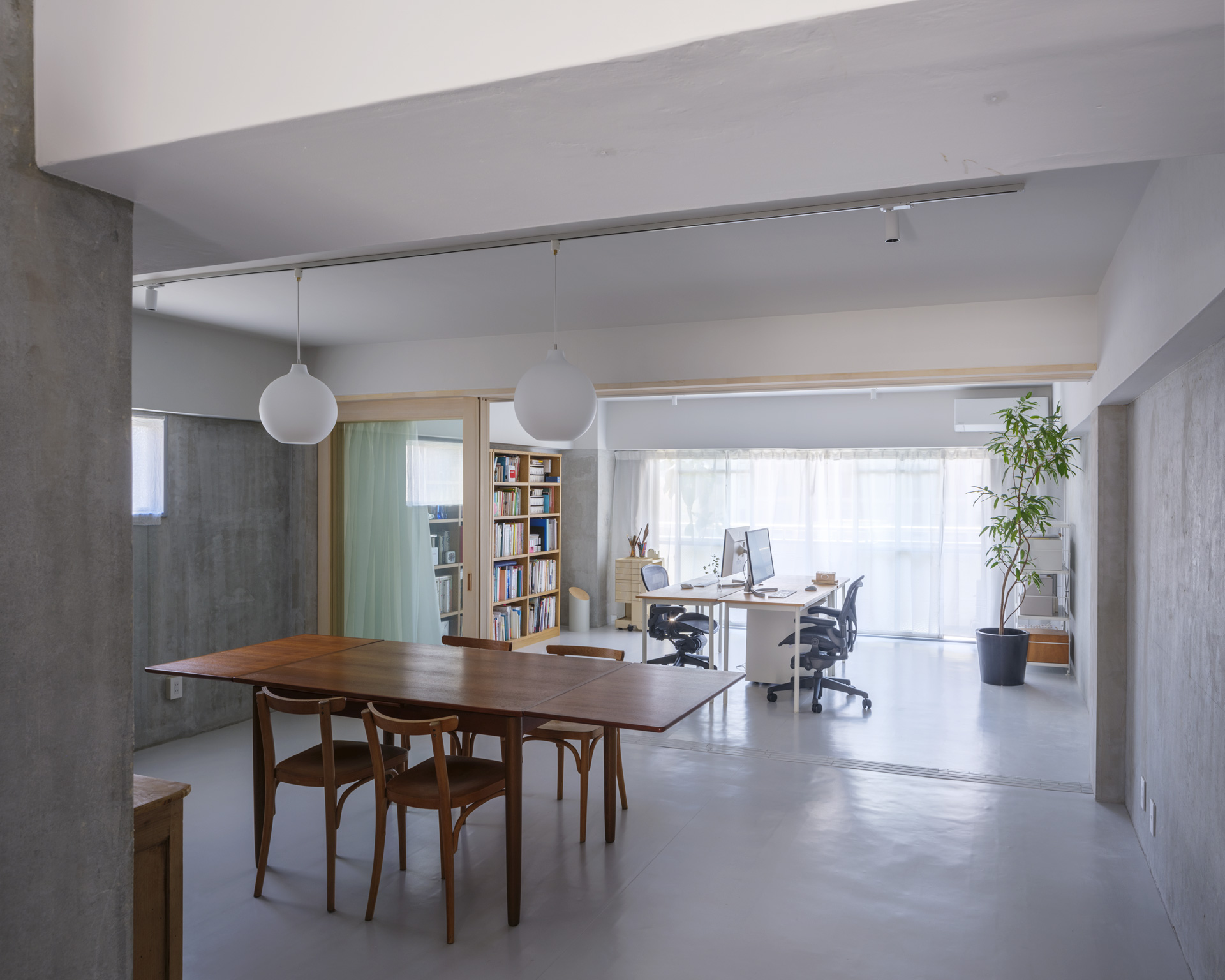
4. Converting Old Buildings into Lodging Facilities
Converting old buildings into hotels, simple lodging facilities, and ryokan (traditional inns) has been the fastest-growing adaptive reuse pattern in Japan in recent years. The recovery of inbound tourism, growing tourism investment in regional cities, and the worsening problem of vacant buildings have all converged. Old buildings near stations or tourist sites are increasingly being reborn as lodging.
4-1. Why Lodging Conversions Are Popular
Compared to office or retail conversions, lodging offers several distinct advantages:
- Higher revenue potential: Operating year-round as a simple lodging facility, ryokan, or hotel can generate 2–3× the per-tsubo revenue of an office lease.
- Inbound demand capture: The “Japanese-ness” of older buildings is a real differentiator for foreign travelers.
- Locational fit: Near stations, in tourist areas, or in entertainment districts — the kinds of places where old buildings often sit — work well for lodging.
- Risk diversification: Multiple rooms spread vacancy risk across many guests rather than relying on a single tenant.
4-2. Three Legal Frameworks to Solve Together
Lodging conversion in Japan requires resolving three legal frameworks simultaneously, which differs fundamentally from a simple office or retail conversion:
| Framework | What It Governs | Key Requirements |
| Building Standards Act | Construction, layout, evacuation | Conversion confirmation (>200 m²), evacuation regulations, interior finish restrictions, zoning |
| Hotel Business Act / Private Lodging Business Act | Operational permit | Permits for simple lodging or hotel operations, facility standards (room area, sanitation, etc.) |
| Fire Service Act | Fire safety | Automatic fire alarm systems mandatory regardless of floor area; emergency lighting; flame-retardant materials |
Fire Service Act requirements jump sharply the moment a building’s use changes to lodging. Items not required for office use — automatic fire alarms, emergency lighting, certified flame-retardant materials — all become mandatory, and unbudgeted construction costs can quickly stack up. Resolving all three frameworks together at the design stage is essential.
For a deeper treatment of lodging conversions specifically, see our companion article on converting kominka and old buildings into lodging facilities (Japanese).
4-3. Challenges Specific to Buildings (vs. Detached Houses)
Compared to converting a single house or kominka, multi-unit buildings present unique issues:
- Two-way evacuation: With multiple floors and units, providing redundant escape paths and evacuation stairs becomes a major design constraint.
- Verifying fire-resistant construction: Lodging requires high fire-resistance performance, and the existing building’s performance must be documented.
- Buildings without a Certificate of Inspection: Where final inspection at completion was skipped, the official MLIT Existing Building Survey Guidelines apply (see Section 6-2).
- Major fire equipment additions: Depending on floor count and scale, sprinklers, indoor fire hydrants, and emergency lighting may all need to be added.
These all require specialized architectural judgment. Without a feasibility study by an architectural office before kickoff, projects can easily run into unexpected costs or stall completely.
5. The Conversion Process, Step by Step
5-1. Survey and Seismic Diagnosis
The initial investigation is the most important phase of any conversion project. This is where the building’s seismic performance, equipment condition, and legal constraints are assessed. Seismic diagnosis and structural diagnosis determine how much work is necessary and what can be preserved.
For a change of use, you must also confirm whether the new use is compatible with the existing building — including all relevant requirements under the Building Standards Act and Fire Service Act.
5-2. Design and Concept Development
Based on the survey results, the design proposal for the conversion is developed. The building’s character is leveraged to its fullest, with spatial design optimized for the new use. Eco-conscious and energy-efficient design principles are also expected. Successfully blending the building’s “old” character with new elements — both inside and out — is what defines a successful project.
5-3. Permits and Legal Procedures
For conversions involving more than 200 m², the legal application process is unavoidable. This starts with a building confirmation application (kakunin shinsei), followed by the documentation needed to comply with the Fire Service Act and seismic standards. Additional permits may be required to clear new regulatory hurdles tied to the new use.
5-4. Construction
Once the design is finalized, construction begins. Tight coordination with the contractor — for quality and schedule control — is critical. The team should be set up to respond quickly to issues or changes that arise during construction.
5-5. Operations Launch
In the operations phase, the focus shifts to running and monetizing the completed building. This includes lease arrangements and marketing strategy, plus — for lodging projects — booking systems, key handover, and cleaning operations. The right operational structure is what sustains the business after the design office hands the building over.
6. Legal and Technical Challenges — and How to Solve Them
6-1. Existing Nonconforming vs. Illegal Buildings
The first hurdle in any old-building project is identifying whether the building is “existing nonconforming” (kizon futekikaku) or actually “illegal” (ihō kenchiku) — they sound similar but require very different responses.
| Existing Nonconforming Building | Illegal (Noncompliant) Building | |
| Definition | Was legal at the time it was built, but no longer meets current standards because of subsequent changes in law or urban planning. | Did not comply with the law or procedures in effect at the time of construction, either originally or after later additions or alterations. |
| 主な要因 | Changes in road frontage requirements, stricter floor area or coverage ratios, updated seismic standards. | Unpermitted additions, exceeding floor area ratio, missing building confirmation or final inspection. |
| 売却・融資 | Financing is possible but may affect collateral valuation. | Financing is very difficult. Correction is generally required. |
| 将来の対応 | When you alter or rebuild, you must bring the building into compliance with current law (retroactive application). | A corrective action plan must be prepared and implemented. |
A common pattern in older buildings is that interior alterations and partition removals were repeatedly carried out without proper notification, leaving fire compartments or evacuation routes out of compliance. These often surface during the conversion application process.
For existing nonconforming buildings, Article 3 Paragraph 2 of the Building Standards Act exempts certain ranges from current code. Determining exactly what is exempt and what must be corrected requires a licensed architect’s judgment.
For illegal buildings, correction is generally required — but this does not mean immediate demolition. A corrective plan can be developed and executed in stages, in consultation with the relevant authorities. raumus handles this kind of roadmap work, including consultations with local government.
If you are dealing with a similar issue in an inherited detached house rather than a building, see our related article on reactivating inherited vacant houses (Japanese).
6-2. When There Is No Certificate of Inspection: The Guideline Survey
A frequent issue with old buildings is the absence of a Certificate of Inspection (kensa-zumi-shō) — the document proving the building was legally completed. Without it, financing and conversion applications generally cannot proceed.
This is where the Guideline Survey established by Japan’s Ministry of Land, Infrastructure, Transport and Tourism (MLIT) comes in. The formal name is “Survey of Compliance with the Building Standards Act for Buildings Without a Certificate of Inspection, Using Designated Confirmation and Inspection Bodies” (based on Article 12, Paragraph 5 of the Building Standards Act).
In this survey, an architect investigates and certifies whether the building was legal under the law in effect at the time it was built — not under current law. Benefits include:
- Opening the door to financing: Banks gain objective proof of legal safety, allowing the building onto the loan-eligibility table.
- Smoothing the conversion application: This survey is often a prerequisite before a change-of-use confirmation can be filed.
- Establishing asset value: A building moves from “unknown status” to “surveyed.” Risk is quantified for sale or lease, making buyers and tenants easier to find.
The MLIT issued the “Existing Building Survey Guidelines (1st Edition)” in 2024, formalizing the process. If you are considering a building conversion, this is one of the first steps to consider.
6-3. When Is a Conversion Confirmation Required?
A 2019 amendment to the Building Standards Act removed the confirmation application requirement for change-of-use projects under 200 m². The intent was to encourage adaptive reuse of existing buildings and accelerate new ventures.
However, even when no confirmation is required, other regulations still apply. You cannot, for instance, change a building’s use to one not permitted in its zoning category. Fire alarms, evacuation routes, and other safety items must still meet current code, so consulting a specialist is recommended even on small projects.
6-4. Seismic Reinforcement and Energy Efficiency
Japan is highly earthquake-prone, and seismic upgrades are unavoidable in any old-building renovation. Buildings constructed in the 1950s through the 1980s typically conform only to the standards of their time, falling short of current code.
Seismic retrofitting can take many forms — exterior reinforcement, interior structural reinforcement, and so on. Adding shear walls or installing seismic isolation can dramatically improve performance.
Energy efficiency is similarly essential. Today’s buildings are expected to provide good insulation and energy-efficient equipment. In an old-building renovation, high-efficiency systems can lower energy costs and reduce environmental impact. Switching to LED lighting and high-performance insulation produces meaningful gains in a short timeframe.
6-5. Redesigning Fire Protection and Evacuation
Conversions also require fire protection and evacuation plans to be redesigned. Converting an office building into a café, for instance, means installing the fire-protection equipment expected of food-and-beverage establishments — kitchen suppression, alarm systems, and so on. Evacuation routes and emergency equipment also need to be reviewed against current safety standards.
Old buildings often have narrow evacuation routes, so widening or improving these paths is important. Layout adjustments and renovation work can secure refuge zones or reposition staircases, ensuring safety in fires and other emergencies.
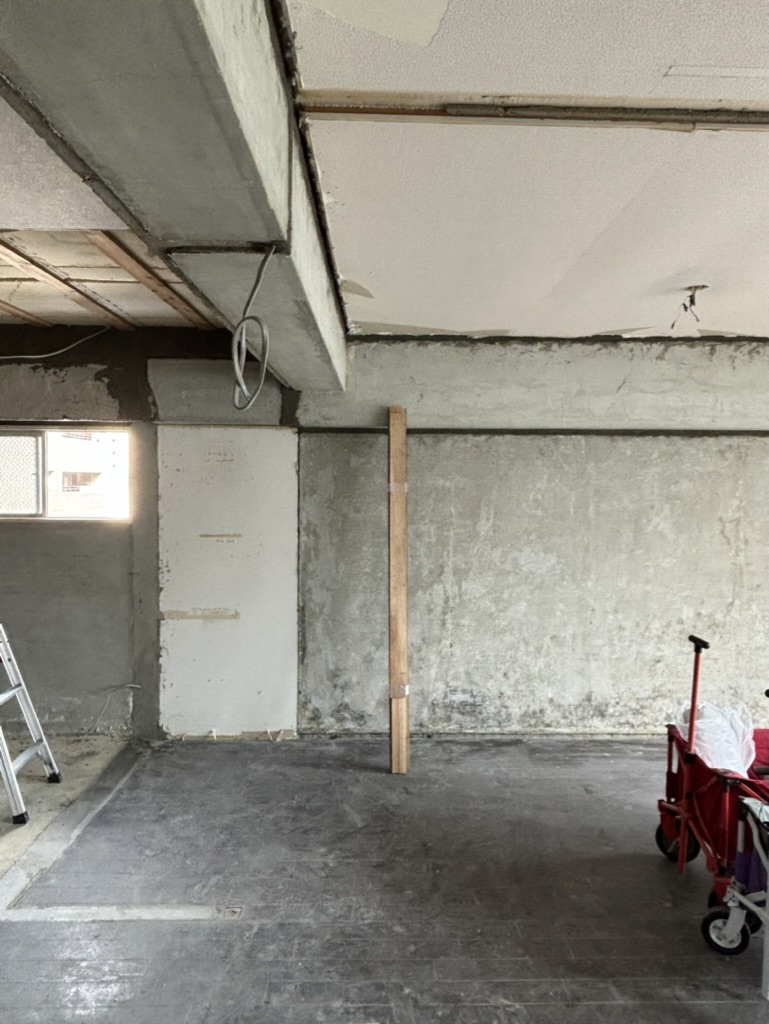
7. The Future of Adaptive Reuse in Japan
Japan’s real estate market is increasingly defined by the realities of a declining and aging population. Renovation and change of use are drawing more attention as a result. In urban centers in particular, where land supply is limited, smart reuse of existing buildings is essential.
Adaptive reuse does more than breathe new life into old buildings — it contributes to local economic development and reduced environmental impact, making it a meaningful part of sustainable development. Even buildings burdened with nonconforming or illegal status can, with the right professionals and the right process, be revived as productive assets. The first step is simply to understand where you stand today.
8. Frequently Asked Questions
Q. What does “change of use” mean in Japanese building law?
A change of use (yōto henkō) is the legal procedure of reassigning an existing building to a different purpose under the Building Standards Act — for example, converting an apartment building to a hotel, or a warehouse to a café. For projects above 200 m², a formal confirmation application is required.
Q. How much does it cost to renovate an old building in Japan?
A light interior refresh starts around JPY 300,000 per tsubo (~USD 2,000 / ~3.3 m²). A full renovation or change-of-use project starts around JPY 500,000 per tsubo (~USD 3,300). Including seismic and envelope work, costs start around JPY 800,000 per tsubo (~USD 5,300). Adaptive reuse is typically 20–30% cheaper than equivalent new construction.
Q. Can I convert an old building in Japan into a hotel or short-term rental?
Yes. Converting old buildings into hotels, simple lodging facilities (kan’i shukusho), or ryokan is the fastest-growing adaptive reuse pattern in Japan today. The project must satisfy three legal frameworks simultaneously: the Building Standards Act, the Hotel Business Act (or Private Lodging Business Act), and the Fire Service Act. Fire safety requirements in particular increase sharply when use changes to lodging.
Q. What if the building has no Certificate of Inspection (kensa-zumi-shō)?
A building without a Certificate of Inspection can still be financed and converted via the MLIT Guideline Survey, in which a licensed architect certifies that the building was legal under the law at the time it was built. The MLIT issued formal Existing Building Survey Guidelines in 2024, making this process more standardized.
Q. What is the difference between an “existing nonconforming” building and an “illegal” building?
An existing nonconforming building (kizon futekikaku) was legal when built but no longer meets current standards due to subsequent changes in law. Financing is possible. An illegal building (ihō kenchiku) did not comply with the law in effect at the time of construction. Financing is very difficult, and a corrective plan is generally required.
Q. Do I need a confirmation application for every change of use?
No. Since the 2019 amendment, projects under 200 m² do not require a Building Standards Act confirmation application. However, zoning rules, Fire Service Act requirements, and other safety standards still apply regardless of size.
Q. Does raumus work outside Fukuoka?
raumus is based in Fukuoka and serves all of Kyushu, plus Yamaguchi and Hiroshima prefectures. The firm specializes in kominka renovation, change-of-use projects for nonconforming buildings, and lodging conversion design.
-
 NOTE
NOTE
Types, Costs, and Potential of Ichiku (Building Relocation) | A Case Study of Re…
Architecture1. What Is Ichiku (Building Relocation)? When inhe […]-
 takeda
-
-
 NOTE
NOTE
Adaptive Reuse in Japan: How to Convert Old Buildings into Hotels, Offices, and …
ArchitectureAdaptive reuse — known in Japan as yōto henkō (用途変 […]-
takeda
-
-
 NOTE
NOTE
Akiya Renovation | Attractiveness and Methods of Renovation of traditional Japan…
ArchitectureThe Importance of Renovation of traditional Japane […]-
takeda
-
-
 NOTE
NOTE
Integrated Living: How Blending Work and Home Revitalizes Your Lifestyle
LifeI would like to write about how living in close pr […]-
takeda
-
-
 NOTE
NOTE
The Difference between an Architect and Kenchiku-Shi | Who is an Architect?
ArchitectureWhat is an architect? I am often asked. It is a na […]-
takeda
-
-
 NOTE
NOTE
What Makes a City Attractive? | What Shapes the Atmosphere of Japanese Cities
City1. Whether I want to live there depends on the tow […]-
takeda
-