 takeda
1. What Is Ichiku (Building Relocation)?
When inheriting a family home or a relative’s house, many people face the question of what to do with the building. Maintenance burdens, distance from one’s current life, and other practical considerations often make it unrealistic to simply leave the house standing as it is. The most common choices are to sell the property or demolish it and clear the land. However, if the house contains high-quality timber or features rooms of architectural distinction, simply discarding it is a real loss from an architectural perspective.
This is where the option of ichiku — building relocation — comes in.
In Japanese architectural practice, ichiku refers to the technique of moving a building to another location and reconstructing it there. There are three principal methods:
- Hikiya — moving the entire building intact without dismantling it,
- Full relocation — disassembling the building down to individual components and reassembling it elsewhere,
- Partial relocation / reuse of salvaged timber — selecting valuable members from the existing building and incorporating them into a new structure.
Under Japan’s Building Standards Act, a relocated building is treated as “new construction” at its destination site, which means it must comply with current seismic, thermal, and fire-safety standards. Costs typically run higher than ordinary new construction, and prior survey and design work by qualified professionals is essential.
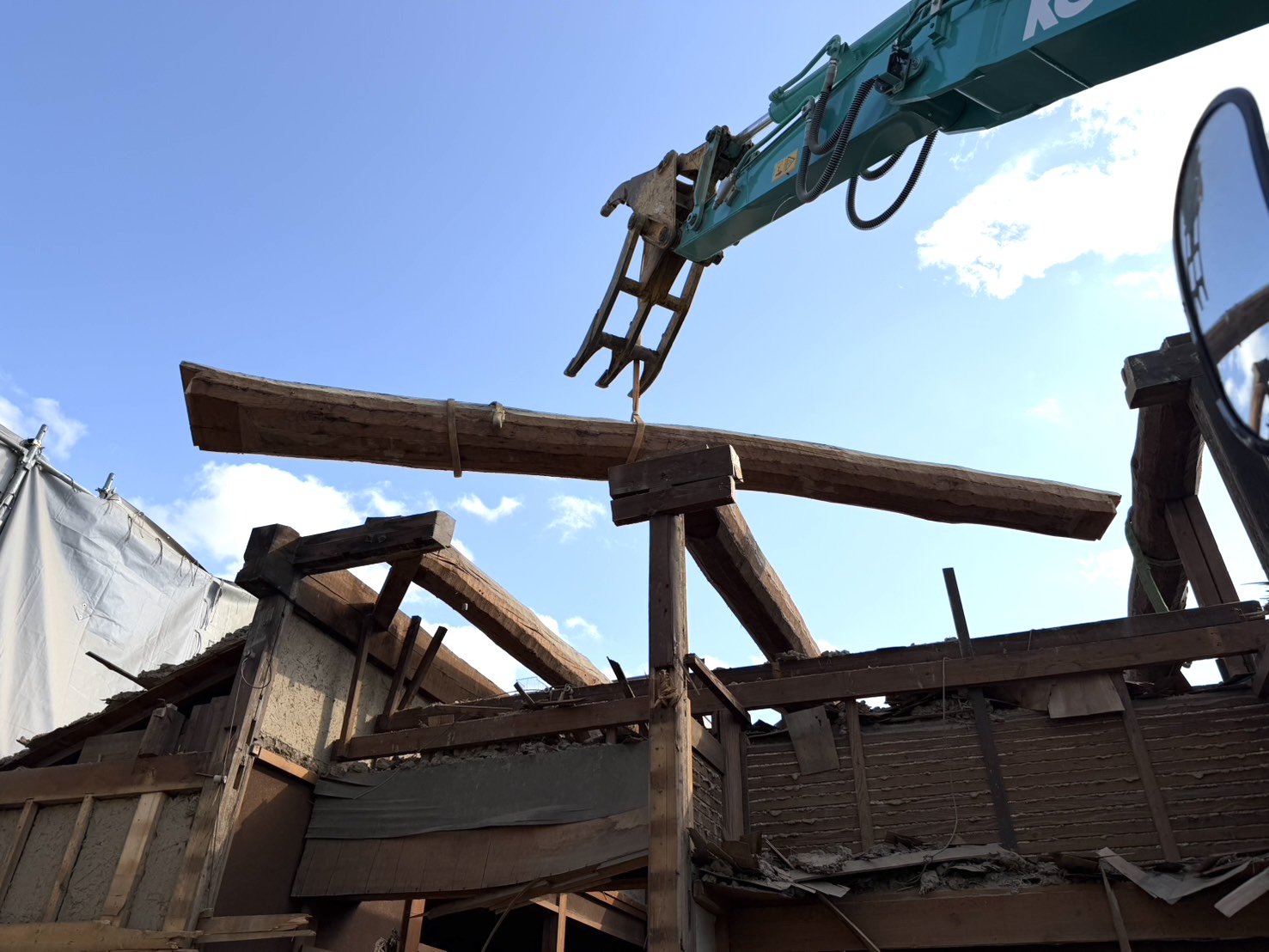
Raumus is currently working on a project that takes structural members from an old folk house (kominka) in Wakayama Prefecture and incorporates them into a new building in Itoshima, Fukuoka Prefecture. Drawing on this project, this article explains the basics of relocating a kominka, the specific approaches available, and the practical realities of cost that must be considered.
2. Three Approaches to Ichiku
Although “relocation” is a single term in everyday Japanese, it covers several distinct techniques. Below we describe each in turn.
① Hikiya (Whole-Building Move)
A method in which the building is detached from its foundation, jacked up, and moved to a new position without being dismantled.
Applicability: Limited to short distances — typically within the same site or to an immediately adjacent plot. Road widths and obstacles along the route make long-distance moves physically impossible.
- Characteristics: The building’s form and finishes are preserved exactly as they are.
- Applicability: Limited to short distances — typically within the same site or to an immediately adjacent plot. Road widths and obstacles along the route make long-distance moves physically impossible.
② Full Relocation
The building is fully dismantled into its constituent members and then reassembled at a new site to recreate its original form. This method is often used in the conservation of cultural properties.
- Characteristics: The original design and spatial composition can be reproduced.
- Challenges: Bringing the structure into compliance with current Building Standards and energy-efficiency codes typically requires extensive reinforcement and modification, often pushing the total cost above that of new construction.
③ Partial Relocation / Reuse of Salvaged Timber (the present case)
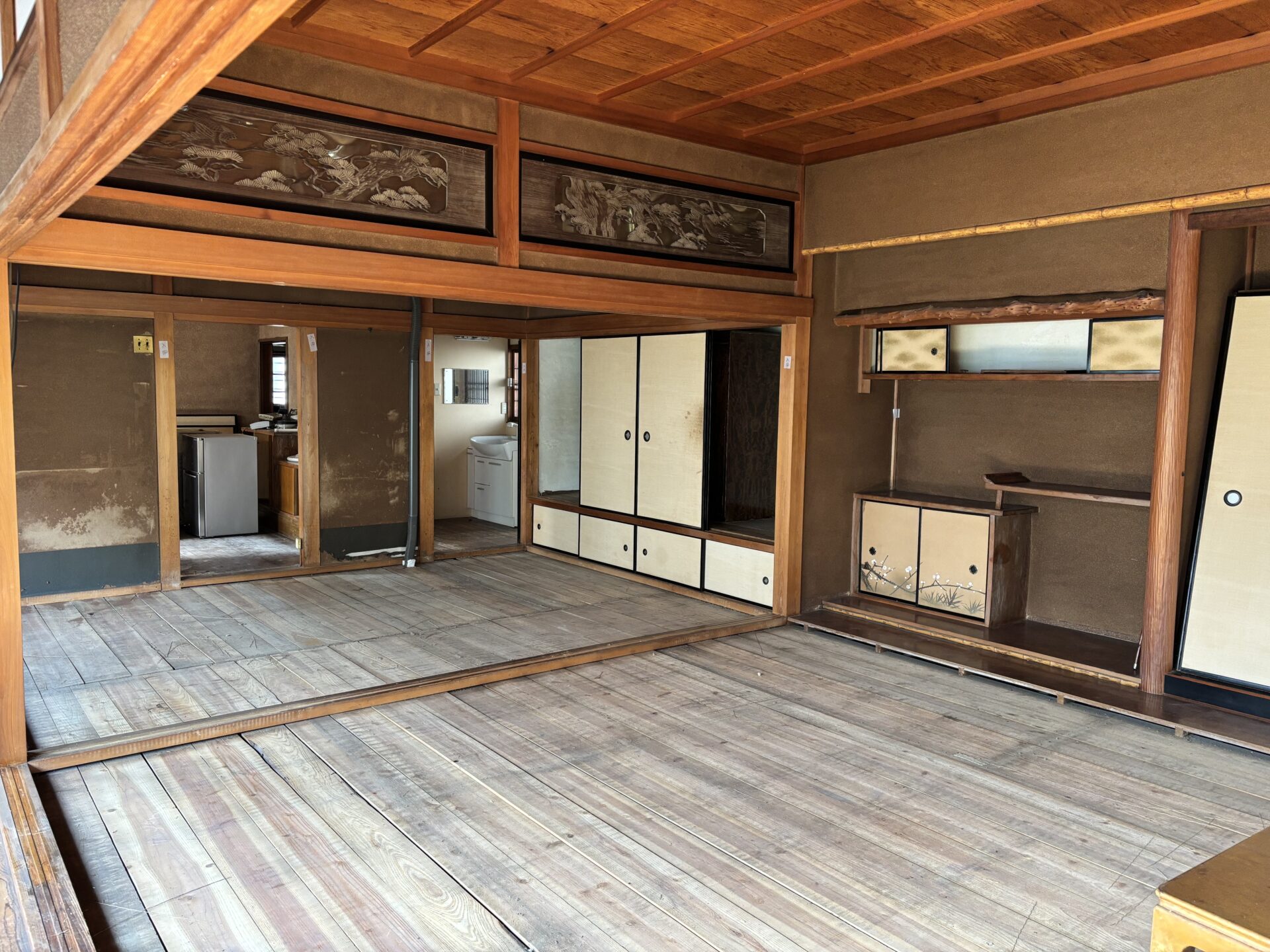
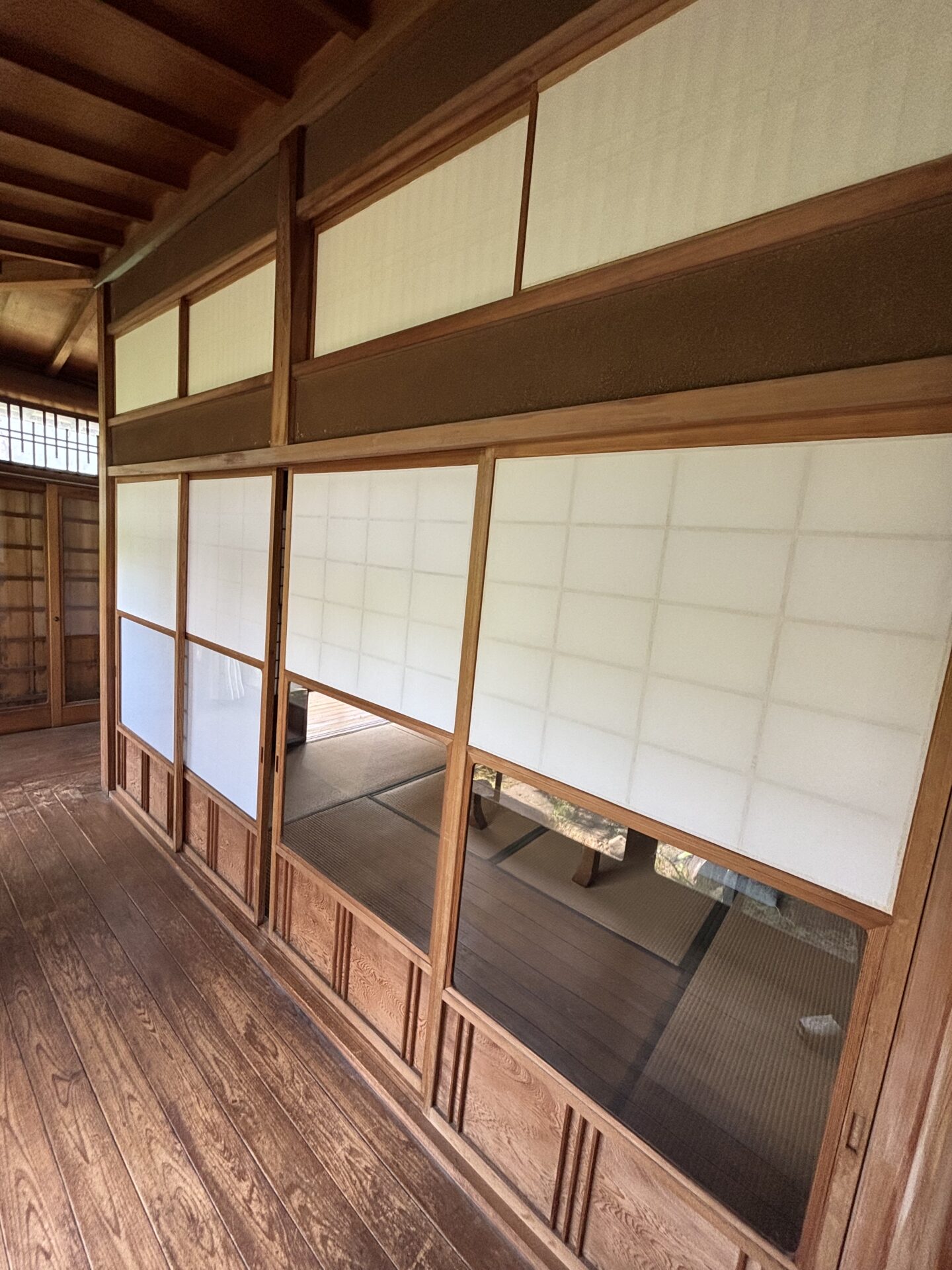
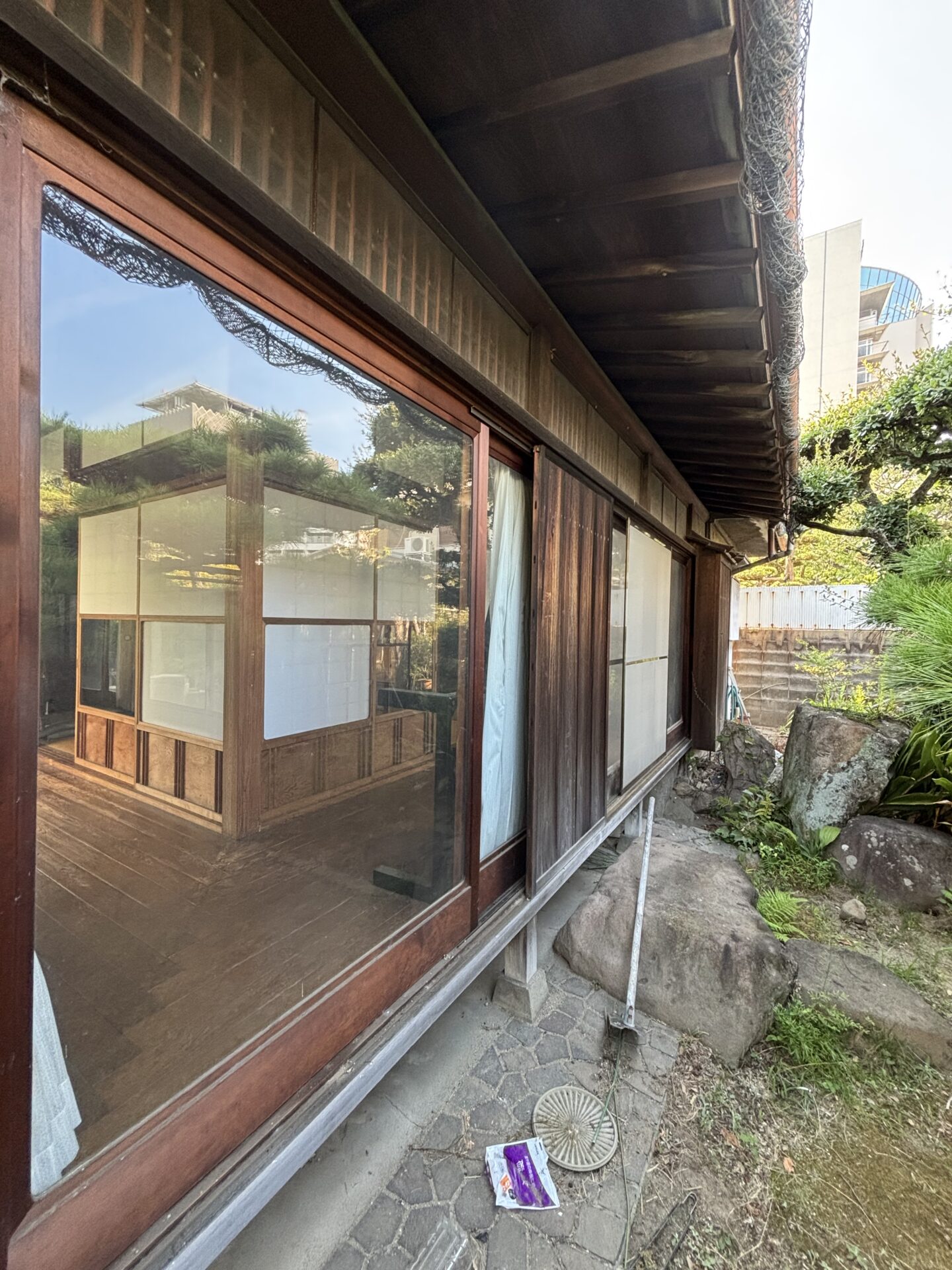
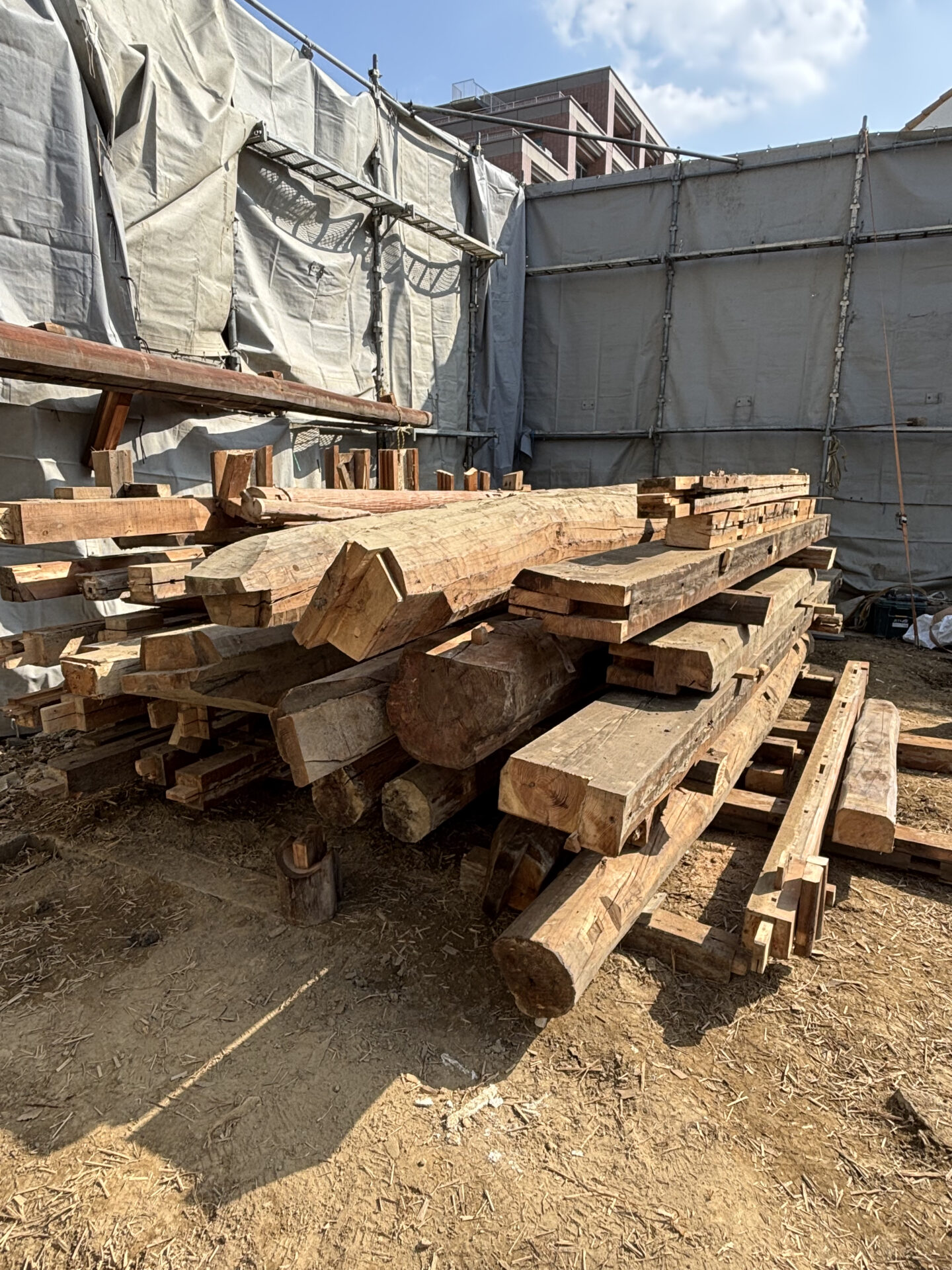
Beams, columns, traditional wooden fittings (tategu), transoms (ranma), and other structurally sound or aesthetically valuable components are selected from the existing building and reused as parts of a newly built structure.
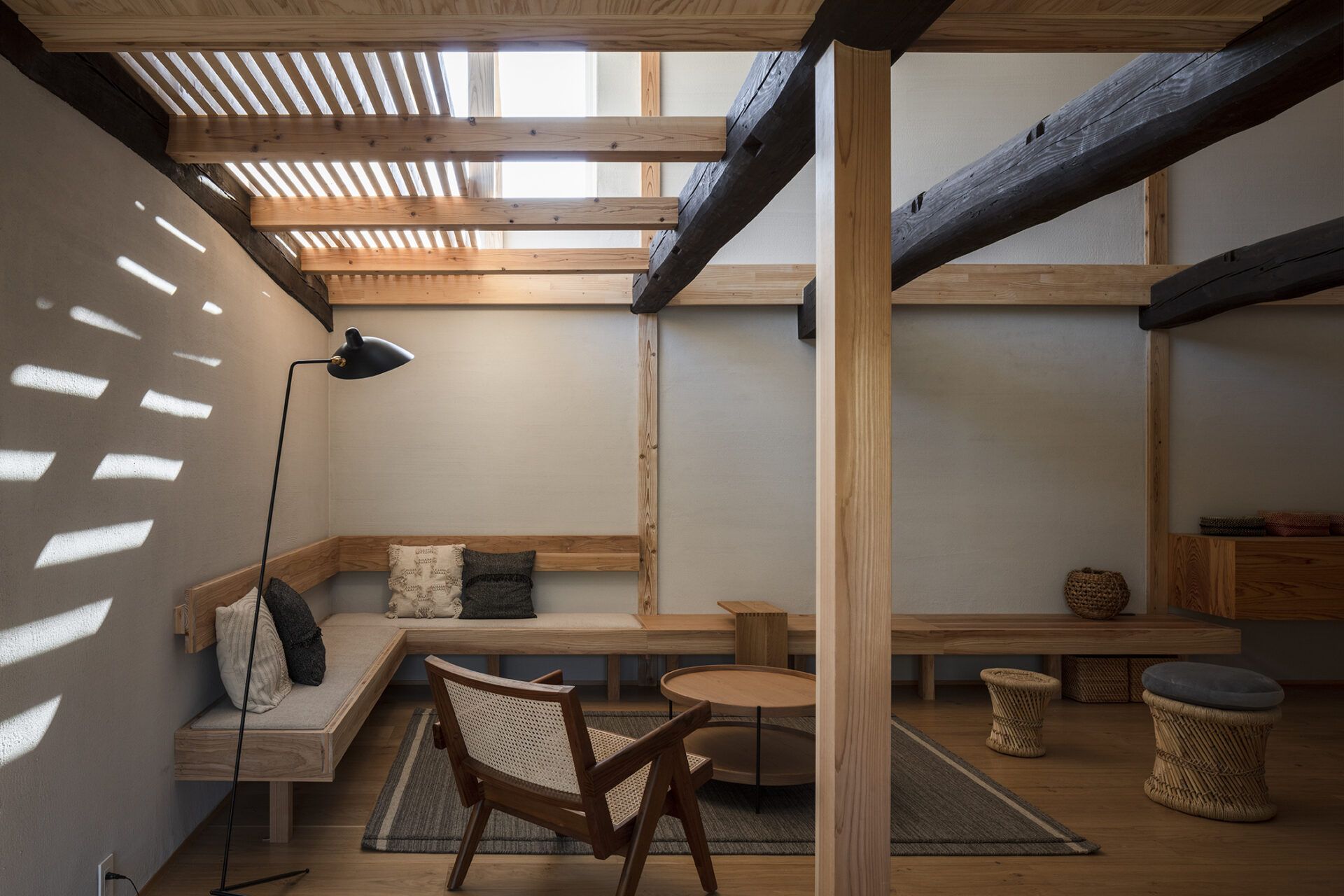
- Characteristics: The textures and presence of aged timber are introduced into a new building that satisfies modern lifestyle requirements and performance standards (insulation, seismic resistance).
- Advantages: Because the entire form of the original building is not preserved, the design can respond freely to the conditions of the new site and to its new program.
The Wakayama-to-Itoshima project we are now undertaking is an example of approach ③. We are dismantling a kominka in Wakayama, transporting carefully selected structural members to Itoshima — a coastal area in Fukuoka surrounded by sea and mountains — and incorporating them into a newly built holiday house.
Why Go to the Trouble of Transporting Timber?
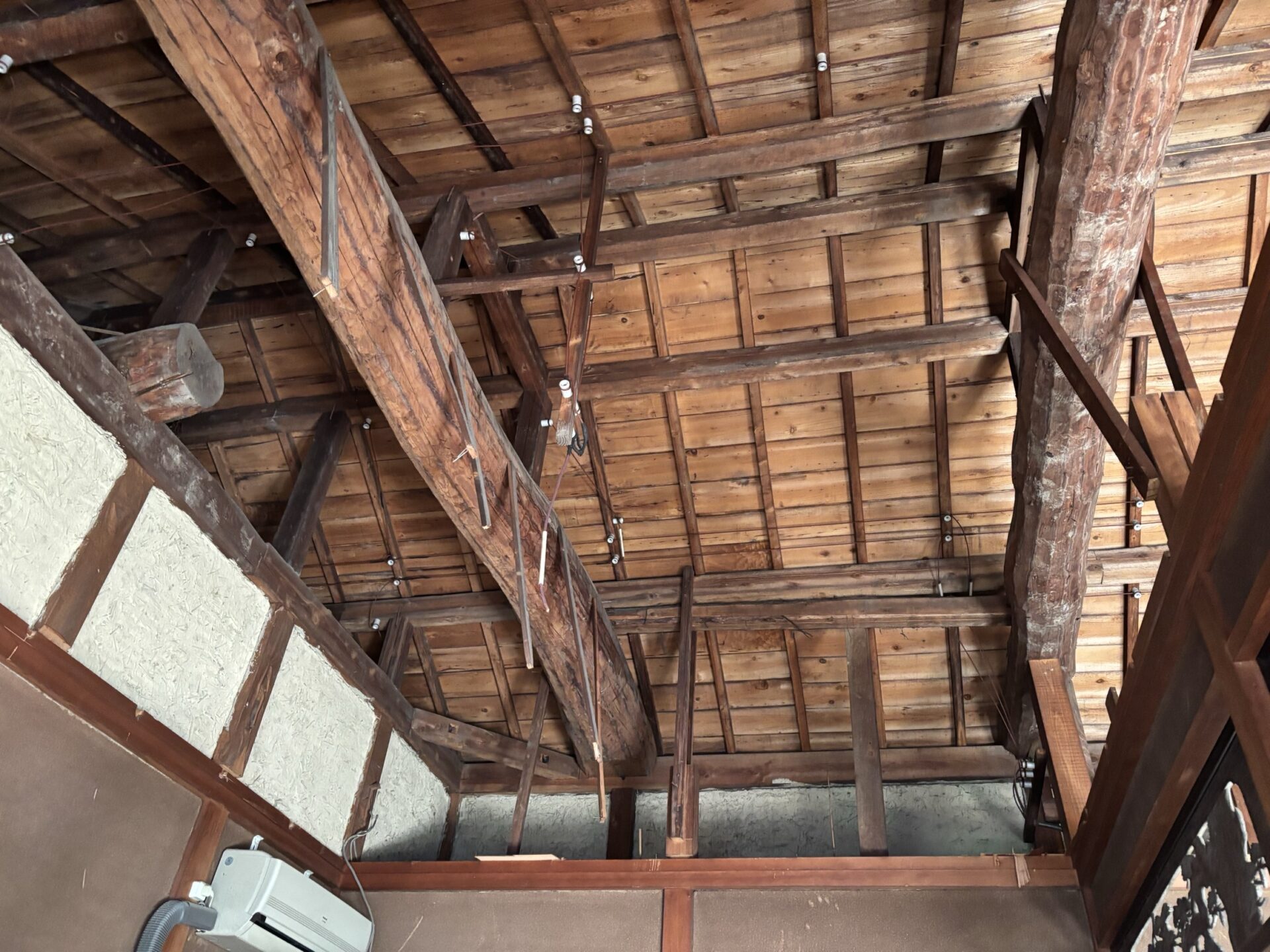
The point of this project is not nostalgia. Old timber that has dried and gained strength over decades or even a century — jimatsu (Japanese red pine) and keyaki (zelkova), for example — possesses a presence and material quality that simply cannot be matched by new lumber on today’s market.
At the same time, continuing to live in a kominka exactly as it stands presents real difficulties: meeting today’s expectations for thermal comfort and seismic safety is a high bar. Our approach is therefore to build a high-performance “vessel” using contemporary technology, and then to place within it, as the inner skeleton, old timbers whose textures can only be earned through the passage of time. The relocation here is a deliberate design choice — a way to set old and new materials in dialogue and to elevate the quality of the space.
3. Building Relocation and the Building Standards Act: Clearing the Legal Hurdles
When considering the relocation of a kominka, one issue cannot be avoided: compliance with the Building Standards Act. Japanese law places strict limits on simply moving an old building and continuing to treat it as the same legal “building.
3.1 Relocation Is Legally Treated as “New Construction”.
This is not widely known, but moving a building to another location is, as a rule, legally treated as new construction under the Building Standards Act. Even if the original building dates from the early Shōwa or the Meiji era, it must clear all of today’s latest standards — seismic, fire-resistance, energy efficiency, and so on — at the destination site, or building permission (kakunin shinsei, the building confirmation application) will not be granted.
3.2 The Wall of Structural Calculation: How to Evaluate Old Timber
Modern wooden houses demonstrate safety through quantified values: the cross-sections of columns and beams, the metal connectors at joints, the quantity of bearing walls, and so forth. But the traditional construction methods of kominka — such as ishiba-date (foundations of stones laid directly on the ground, with columns set on top) and ashigatame (lower horizontal tie members) — are flexible structures (jū-kōzō) that do not fit cleanly into the calculation formulas premised on rigid structures (gō-kōzō) that today’s codes assume.
- Strength evaluation of members: Salvaged timber does not carry clearly defined strength values like those of the JAS (Japanese Agricultural Standard) grading system. The structural engineer must assess each species and its drying state, applying appropriate safety margins to the calculations.
- Reinforcement at joints: Traditional joinery — the tsugite (longitudinal joints) and shiguchi (perpendicular joints) — alone often cannot meet current standards. Hidden reinforcement with bolts, hold-down hardware, or modern bearing walls is generally required.
3.3 Why Partial Reuse Is Often the Realistic Solution
Full relocation — reproducing the entire form of the original building — entails enormous cost and time to satisfy the structural calculations and thermal performance described above. Partial relocation (reuse of salvaged timber), the approach we are taking on the Itoshima project, allows old timbers to be incorporated as finish materials or expressive structural members within the legal framework of new construction.
- Hybrid with a modern frame: A robust frame that meets current standards is constructed, and old timbers are placed within it. This makes it possible to reproduce the spatial composition and material qualities characteristic of kominka while ensuring legal safety.しながら、古民家特有の空間構成や質感を再現することが可能になります。
3.4 Restrictions in Fire-Prevention Districts
Depending on the destination’s zoning — in particular Fire-Prevention Districts and Quasi-Fire-Prevention Districts (urban zoning categories under Japanese law that restrict the use of combustible materials) — exposing wood to view may be limited. To avoid having beautiful beams and columns covered up by gypsum board, checking the legal restrictions of the prospective site is essential from the very earliest stage of land selection.
4. The Structure of Costs in Building Relocation
When considering relocation, understanding cost is the most important step. The assumption that “using old timber saves on materials, so the project will be cheaper” is, in most cases, mistaken. Building with salvaged timber generally costs more than ordinary new construction. The reasons come down primarily to labor and craft.
Three Factors That Drive Costs Up
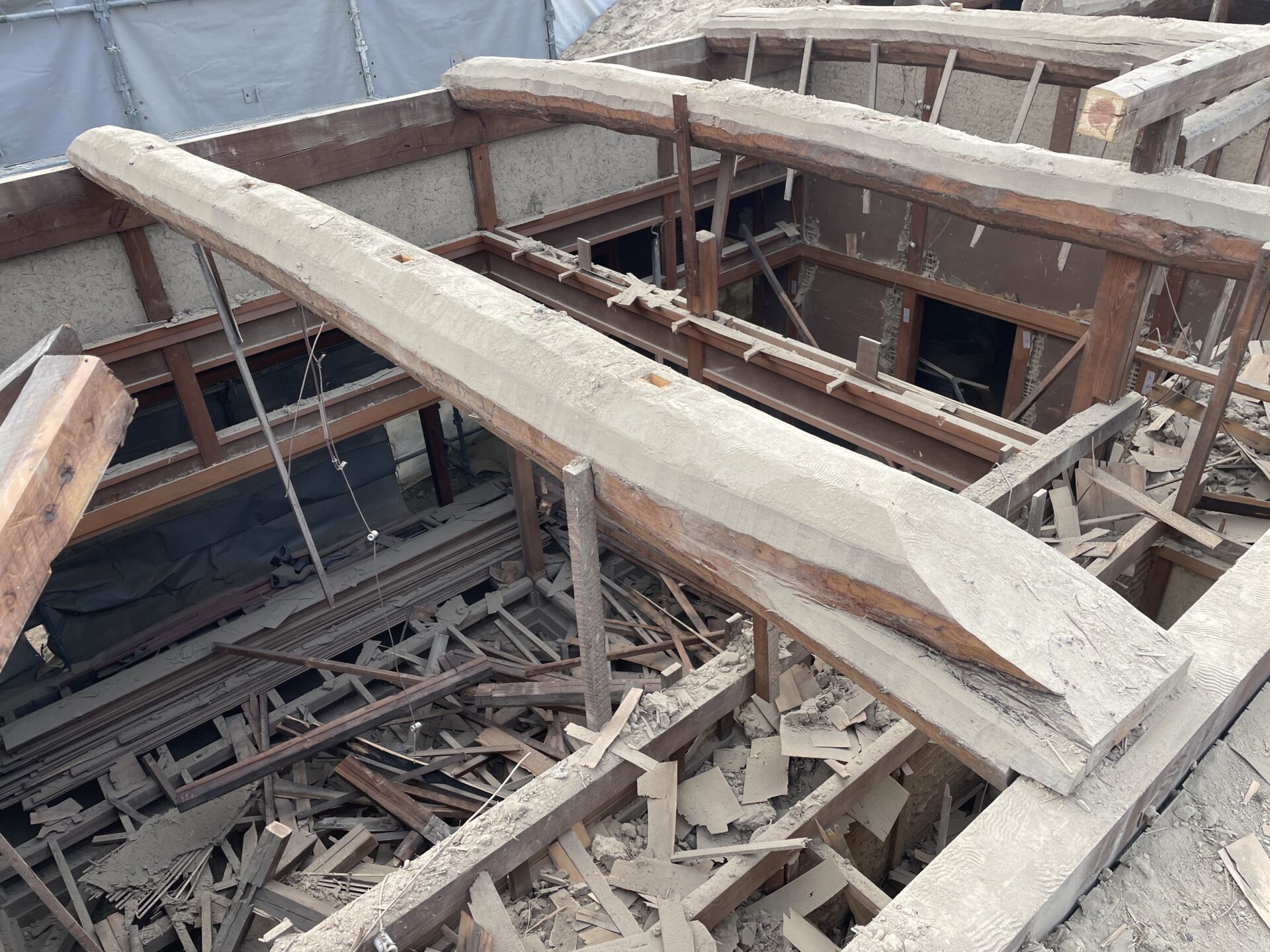
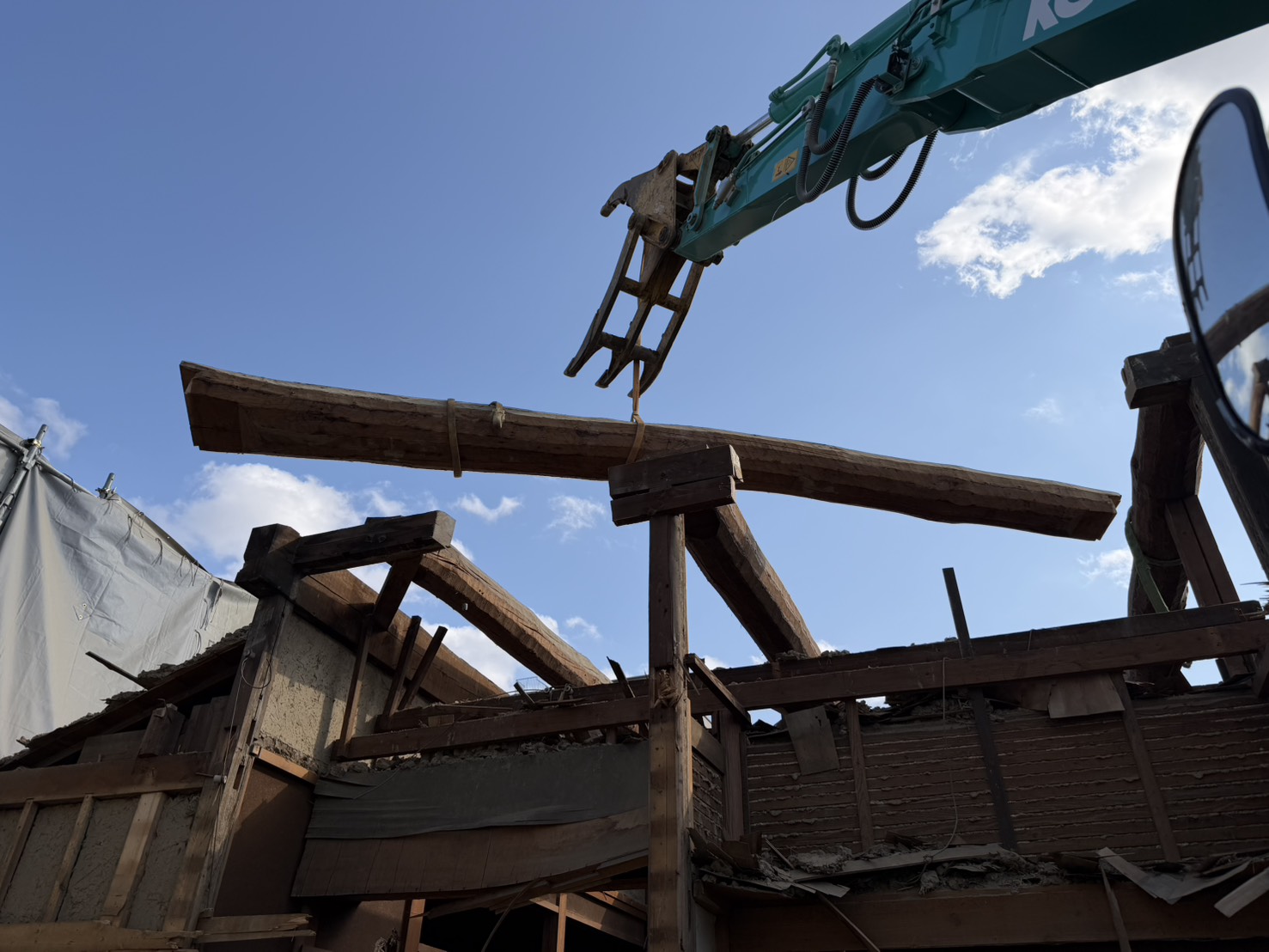
- Method of dismantling (hand-dismantling). Ordinary demolition uses heavy machinery to break the building apart, but in relocation the goal is to rescue the members. Carpenters must read the structure and remove parts carefully by hand. This requires several times the labor and time of a standard demolition.
- Transportation and storage. Transport costs are incurred for moving long beams and columns over long distances, along with storage costs for keeping the timber in proper conditions until it is ready to be processed.
- Processing and cleaning of old timber. Old timber is often deformed by age and pierced with old mortise holes. Joining it to modern pre-cut (factory-machined) lumber requires hand-cutting (tekizami) by highly skilled carpenters. Costs also arise for washing away years of grime and for surface finishing.
Why It Is Worth the Cost
The reason for choosing relocation despite these costs is not cost-performance but value. The material value of large-diameter timber that is no longer obtainable, and the spatial uniqueness that mass production cannot reproduce — these are what the additional investment buys. Relocation should be understood as the cost of bringing such qualities into a building.
5. Advantages and Disadvantages of kominka relocation
A summary of the pros and cons of kominka relocation, including partial relocation:
Advantages
- Design quality: The colors and textures unique to old timber give depth to the space. They pair well with modern materials such as glass, steel, and concrete, enabling highly distinctive design.
- Reduced environmental impact: Usable resources are kept in circulation rather than discarded.
- Continuity of memory: Even when the physical “house” is gone, elements of it live on in a new everyday life.
Disadvantages
- Cost and schedule: As noted, the labor involved tends to drive up costs and lengthen the schedule.
- Uncertainty: The exact condition of members — rot, termite damage, and so on — often cannot be fully determined until the building is dismantled, so flexibility for plan revisions is required.
6. The Process of Considering Relocation, and the Role of raumus
If you are considering demolishing a building you own and at the same time sense potential in its materials, it is essential to consult an architect before placing the demolition order.
Once heavy machinery enters the site, those materials become “industrial waste” and cannot be recovered. Determining which members are structurally reusable and which parts hold design value requires specialized judgment.
Legal compliance, in particular, calls for early-stage consultation with the relevant administrative authorities and designated building-inspection agencies. How a wish such as “we’d like to use these old columns” can be realized under current law, and what constraints will come with it — anticipating these issues and reconciling design with safety is the architect’s role.
In the Wakayama-to-Itoshima project, too, we are not simply transporting materials. We are studying the legal restrictions, the ground conditions, and the climate of the destination, and deciding how the Wakayama members can be placed to best advantage.
How raumus Approaches the Process
- Site survey and evaluation: We visit the actual building and assess, from an architectural perspective, the quality of the materials, the feasibility of removing them, and their potential for reuse.
- Planning: We propose the appropriate approach — full relocation or partial reuse — to suit the budget and the brief for the new building.
- Selection and supervision: We direct the selection of members during dismantling and oversee the process all the way to delivery at the new site.
As the Wakayama-to-Itoshima project shows, distance is not an obstacle. The choice does not have to be a binary one between “preserve everything” and “demolish everything.” There is also the option of extracting what is good and re-editing it as new value.
In Closing
Architecture is not simply a matter of scrap-and-build. Nor is it always best to keep an old building as it is, regardless of the strain involved. Reading the potential of an old building carefully, and using contemporary technology and design to lift it into a space where the next generation can live comfortably — this is the contextual architecture that Raumus pursues.
If you would like to explore, in a balanced way, how a kominka you own might be put to use — including the question of cost-effectiveness — please feel free to get in touch.
Glossary of Japanese Architectural Terms
- Kominka — A traditional Japanese folk house, generally referring to wooden houses built before the 1950 Building Standards Act, often with thick beams, earthen walls, and tile or thatched roofs.
- Ichiku — Building relocation; moving a building to another site and reconstructing it there.
- Hikiya — The technique of moving a whole building without dismantling it, by lifting it from its foundation and sliding it to a new position.
- Ishiba-date — A traditional foundation method in which columns rest directly on individual stones laid on the ground, without rigid anchoring, allowing the building to flex during earthquakes.
- Ashigatame — Horizontal tie members near the base of columns that hold the lower frame of a traditional wooden building together.
- Tsugite / Shiguchi — Traditional Japanese wooden joints; tsugite are longitudinal (end-to-end) joints, while shiguchi are perpendicular (intersecting) joints.
- Tekizami — Hand-cutting of timber by skilled carpenters, as opposed to factory pre-cutting.
- Ranma — Decorative transom panels installed above sliding doors in traditional rooms.
- Yukimi-shōji — A “snow-viewing” sliding paper screen with a movable lower section, allowing a view outside while seated.
- Jimatsu / Keyaki — Jimatsu is locally grown Japanese red pine; keyaki is zelkova, a hardwood prized in Japanese architecture.
- Building Standards Act (Kenchiku Kijun-hō) — Japan’s principal national building code.
- Fire-Prevention District / Quasi-Fire-Prevention District — Urban zoning categories that restrict the use of combustible materials in buildings.
- JAS (Japanese Agricultural Standard) — A national grading system used to certify the strength and quality of structural lumber, among other agricultural and forestry products.
-
 NOTE
NOTE
Types, Costs, and Potential of Ichiku (Building Relocation) | A Case Study of Re…
Architecture1. What Is Ichiku (Building Relocation)? When inhe […]-
 takeda
-
-
 NOTE
NOTE
Adaptive Reuse in Japan: How to Convert Old Buildings into Hotels, Offices, and …
ArchitectureAdaptive reuse — known in Japan as yōto henkō (用途変 […]-
takeda
-
-
 NOTE
NOTE
Akiya Renovation | Attractiveness and Methods of Renovation of traditional Japan…
ArchitectureThe Importance of Renovation of traditional Japane […]-
takeda
-
-
 NOTE
NOTE
Integrated Living: How Blending Work and Home Revitalizes Your Lifestyle
LifeI would like to write about how living in close pr […]-
takeda
-
-
 NOTE
NOTE
The Difference between an Architect and Kenchiku-Shi | Who is an Architect?
ArchitectureWhat is an architect? I am often asked. It is a na […]-
takeda
-
-
 NOTE
NOTE
What Makes a City Attractive? | What Shapes the Atmosphere of Japanese Cities
City1. Whether I want to live there depends on the tow […]-
takeda
-